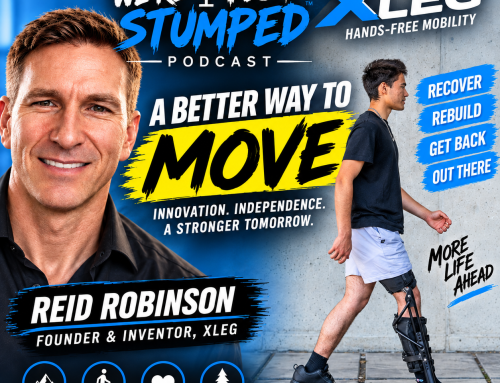
What happens when the limb loss community, prosthetics professionals, nonprofits, and supporters come together for a weekend built around giving back?
In this episode of We’re Not Stumped, Mike Bolland talks with Rob Pittman of Hanger, Chairman of the Hanger Foundation’s Night to Inspire, about the upcoming 2026 Night to Inspire in Nashville, Tennessee.
Now in its third year, Night to Inspire is expanding into a full weekend experience designed to raise funds, build awareness, and support organizations helping people with limb loss, limb difference, and mobility challenges.
Rob shares what attendees can expect, including a Friday evening kickoff at Dolly Parton’s SongTeller Hotel, bourbon experiences, a golf outing, and a Saturday night dinner, reception, and concert at the Country Music Hall of Fame and Museum.
Mike and Rob also discuss:
- How Night to Inspire got started
- The mission of the Hanger Foundation
- Organizations supported through the foundation, including Camp No Limits
- Rob’s lifelong career in orthotics and prosthetics
- The evolution of prosthetic technology
- Why peer support can be so important after limb loss
- Helping new amputees understand what is possible
- Raising awareness and financial support for the limb loss community
- How people can support Night to Inspire even if they can’t attend in person
Rob also reflects on growing up in the orthotics and prosthetics profession and why, after decades in the field, helping people regain mobility and quality of life continues to drive his work.
Night to Inspire 2026 takes place September 19, 2026, in Nashville, Tennessee.
Listen to this episode of We’re Not Stumped to learn more about Night to Inspire, the Hanger Foundation, and the people working to make a difference throughout the limb loss and limb difference community.
Listen on Apple Podcasts
Watch on YouTube
Listen on Spotify
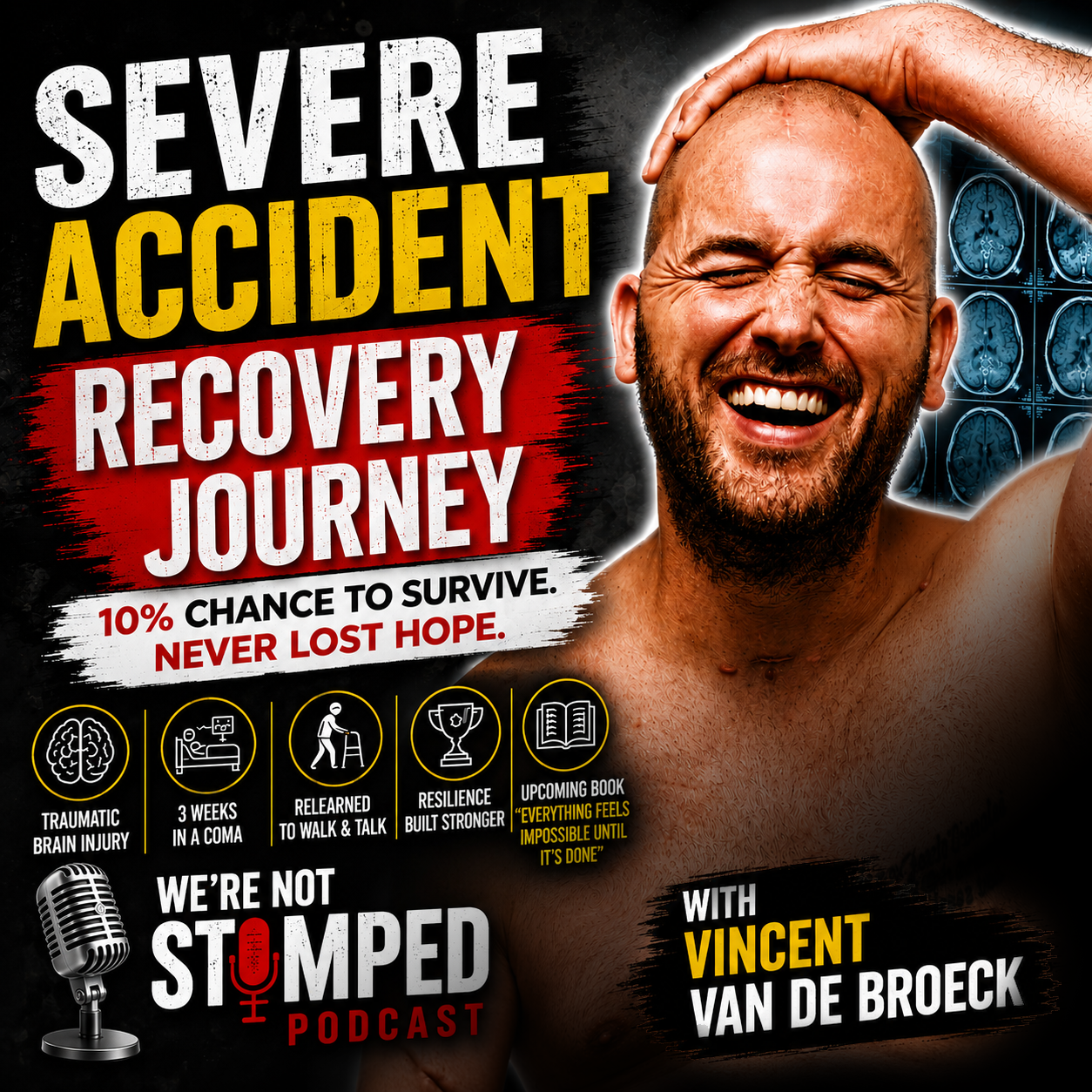
In this episode of We’re Not Stumped, host Mike Bolland talks with Vincent about his extraordinary recovery—relearning how to walk, talk, eat, and handle everyday tasks most of us take for granted. Vincent shares what it was really like to gradually wake from a coma, the difficult prognosis his family faced, and the extensive damage to his skull that eventually required a custom 3D-printed implant. He also discusses the people who refused to give up on him, particularly his wife and family, who lived through weeks of uncertainty while Vincent was unconscious. Through his recovery, Vincent came to see resilience not simply as something you're born with, but as something you can develop and strengthen. That experience also helped shape the ideas behind his book, Everything Feels Impossible Until It’s Done
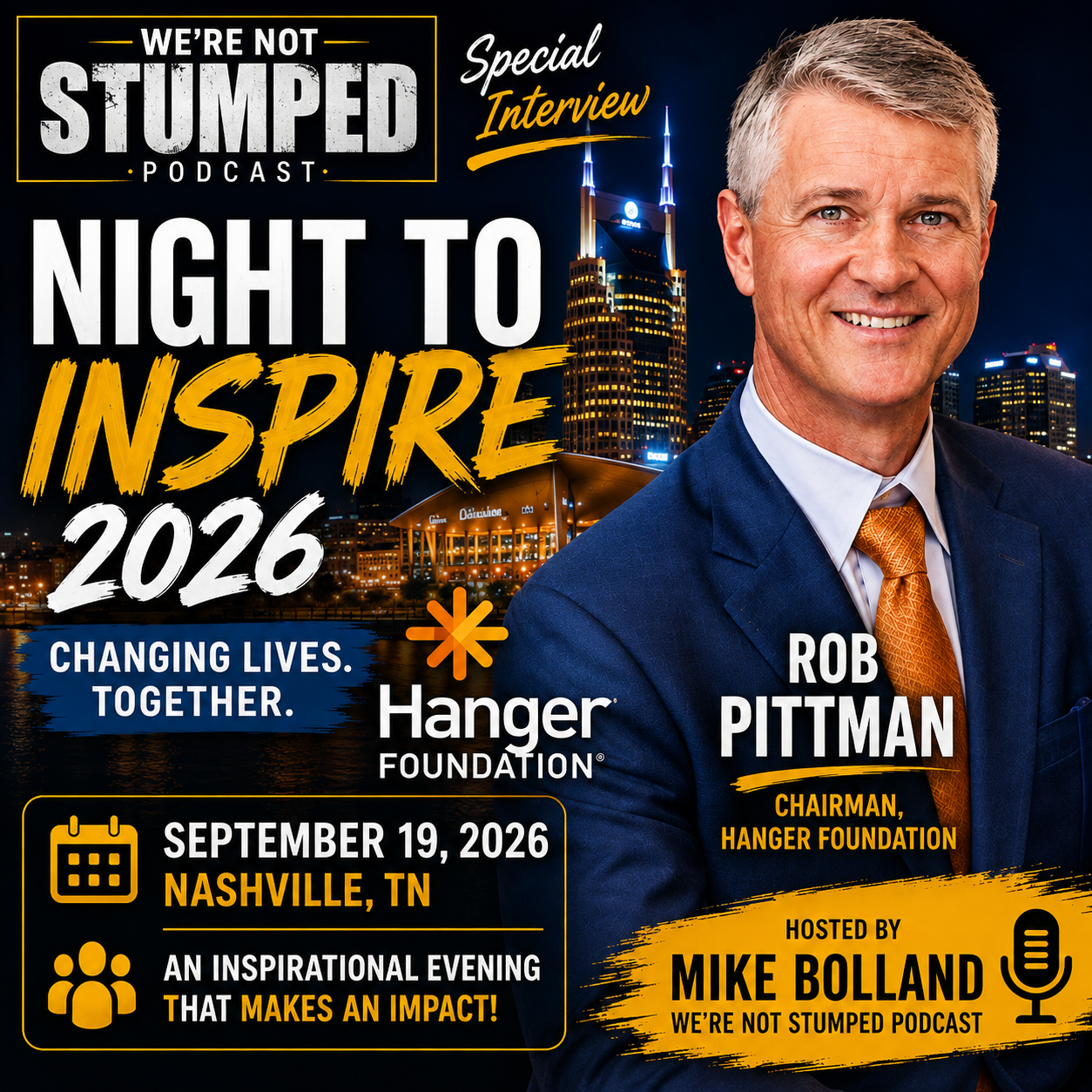
What happens when the limb loss community, prosthetics professionals, nonprofits, and supporters come together for a weekend built around giving back? In this episode of We’re Not Stumped, Mike Bolland talks with Rob Pittman of Hanger, Chairman of the Hanger Foundation’s Night to Inspire, about the upcoming 2026 Night to Inspire in Nashville, Tennessee. Now in its third year, Night to Inspire is expanding into a full weekend experience designed to raise funds, build awareness, and support organizations helping people with limb loss, limb difference, and mobility challenges.
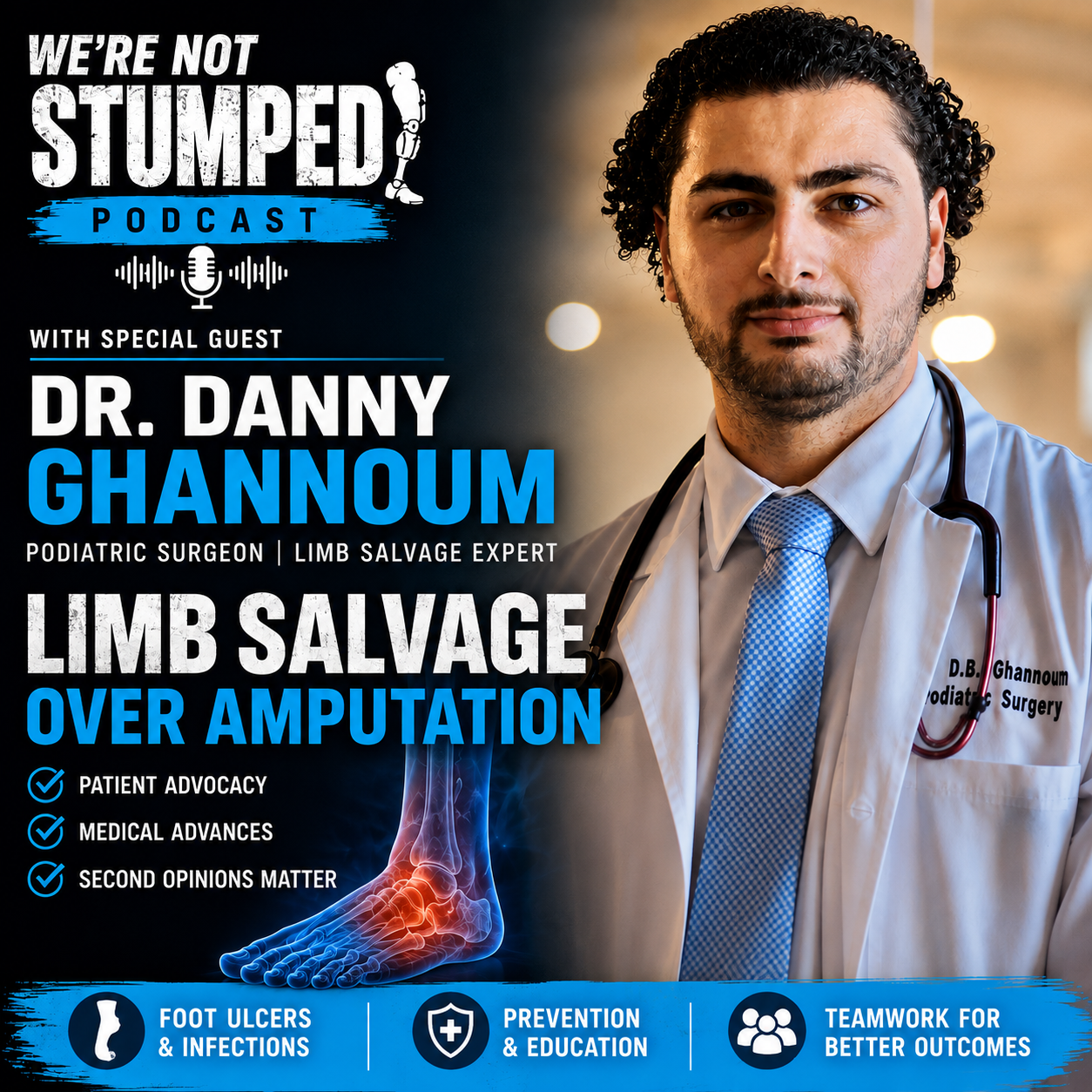
When should a limb be saved—and when might amputation provide a better quality of life? On this episode of We’re Not Stumped, Mike Bolland talks with podiatric surgeon Dr. Danny Ghannoum about limb salvage, diabetic foot complications, Charcot neuroarthropathy, bone infections, and the difficult decisions that can lead to lower-limb amputation. Dr. Ghannoum explains how diabetes, peripheral neuropathy, poor circulation, foot ulcers, and osteomyelitis can put a limb at risk. He also shares complex patient cases that illustrate an important point: saving a limb isn't always the same as achieving the best outcome for the patient.