How do you rebuild your life after a traumatic brain injury? Author, athlete, educator, and accessibility advocate André Greene joins Mike Bolland on We’re Not Stumped to share his story of recovery, adaptation, and finding purpose.
In July 2016, André was struck by a pickup truck while cycling. The crash left him with a traumatic brain injury (TBI) that affected his memory, voice, and independence. In his memoir, Keep Calm & Live On!, he shares the challenges of rebuilding his life and the people who helped him along the way.
In this episode, we discuss:
🚴 André’s life as a runner and triathlete before the crash
🧠 Living with a traumatic brain injury and navigating recovery
🎙️ His experience with vocal cord paralysis
🥽 Returning to cycling with indoor trainers and virtual reality
📱 Using smart technology to support independence
🚌 Advocating for accessible transportation in San Antonio
📖 Writing Keep Calm & Live On! and finding meaning in his experiences
André speaks openly about the ongoing challenges of life after brain injury, the value of community, and his commitment to making everyday life more accessible for others.
Learn more about André and his memoir: https://www.dregreene.com/
💬 What person, tool, or community has helped you adapt to a major life change?
Subscribe to We’re Not Stumped for more conversations with people from the limb loss, limb difference, and broader disability communities.
#TraumaticBrainInjury #TBISurvivor #WereNotStumped
Listen on Apple Podcasts
Watch on YouTube
Listen on Spotify
Mike Bolland: 00:05
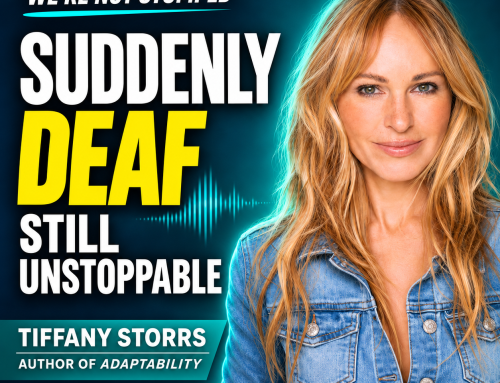
Hello everyone, welcome to the We’re Not Stumped Podcast. I’m your host, Mike Bolland, and today I’m joined by actor, author, and speaker Tiffany Storrs. After the birth of her first child, Tiffany experienced sudden hearing loss that changed how she communicated, worked, and navigated everyday life. She’s here to share that experience, what often people what people often misunderstand about deafness, and how she learned to advocate for herself. We’ll also talk about her acting career and her book, Adaptability, a true story about transforming pain into purpose, which explores a path forward. And she can be found at Tiffany Storrs, S T O R R S dot com. Tiffany, thank you so much for being a guest on the We’re Not Stumped Podcast.
Tiffany Storrs: 00:49
I thank you so much for having me. It’s a pleasure to be here. And thank you for that very warm introduction.
Mike Bolland: 00:56
Well, it’s your life. And so you you are the responsible responsible for that warm welcome because it’s such an interesting thing. We’re talking a little bit before we hit record, and there’s so much to your life that I just find fascinating. And I really can’t wait to get into it. But before we talk about the hearing loss, what was your life like before the hearing loss?
Tiffany Storrs: 01:16
I love that question. There’s actually a chapter in my book called Life Before Death. Life Before Death. And it talks about the life I had envisioned, right? Like I thought I was going on a certain path. I I double-majored in broadcast journalism and Spanish, and I worked for Univision for 19 years, the Spanish-speaking um news station. And I worked my way up from just the little teleprompter girl all the way up to the line director of the five and ten newscasts entirely in Spanish. Like not a lick of English was allowed in the newsroom. And then life took a hard left after I conceived the birth of my first child. I lost all my hearing on one side. No family history, no warning sign, and definitely no exit ramp. And then after the birth of my second, I went bilaterally deaf. It’s still unexplained. We did do fertility treatment. So a lot of um my gut instincts point back to that, but would I change it? God no. Like I had we had tried for four years and struggled with infertility and went through medical intervention and reproductive assistance. So if someone would have told me, you know, Tiffany, you will in your life become a mother and you’ll have two healthy, beautiful children, but you’re gonna go deaf. Like, do you still want that? And I’d I’d sign up for that over and over and over again. But it was so sudden that I didn’t have time to get in my own way. I think a lot of people, at least for me, I’m glad I didn’t know it was coming. Like I think I would have paralyzed myself mentally in terms of what I needed to do and how how is this gonna because the unpolished reality is there’s no good time to lose a sense, right? Like it just it hits you, it hits you hard. And so I was learning how to be a mom at the same time as I was learning how to be deaf. And new motherhood in an in and of itself is such a journey, and there’s no roadmap for that either. And then here I was without sound, and I can’t I couldn’t even begin to comprehend why why this had all come to a head this way. But being, I’ve always been a naturally born problem solver solution, like I’m always like solution focused. Like you come to me with a problem, like I don’t want to hear the kids will say, I can’t figure this out. And I’m like, well, have you know, have you tried? Have you tried? Because if I go jump in and see if I can solve it myself, and if I and if I can, then I’m gonna, you know, I’m gonna be mad at you, I’m gonna come after you because like I’ve been resourceful my whole life. I think that comes from being raised by a single mother who raised us on a teacher’s salary. My brother and I are 18 months apart, so she always had three jobs. And she was such a fierce mother in the terms that we never felt like we were lacking anything. Like maybe we didn’t have all the fancy name design, fancy clothes or designer labels or anything like that, but we never felt like we were missing anything. And she modeled such resilience and resourcefulness. And I honestly think, had it not been for that modeling that she showed me at a very young age, I don’t know. Like I had I would have been so successful at my life adaptations and the transformations that were headed my way, so I always credit a lot of that back to her. But I then, you know, like losing my hearing, being the proactive person that I am, like I wanted to learn ASL right away, like that, because a hearing aid or cochlear implant, those are medical devices, right? They’re not, I think one of the biggest misconceptions about a cochlear implant is that it restores human hearing. It does not. Like, please, whoever’s hearing that and knows anyone with a cochlear implant, it does not restore human hearing. That’s not possible. Like it’s that’s not possible. And I think a lot of people think that. Um, so they think I’m up to speed and that you have an implant now, and you can just like go, go, go, go, go, go. That’s not, I’m hearing electronically now, and that comes with a huge learning curve. And I have spent years and hours in speech therapy and speech rehab. And so I just want to, I love making people aware of that. If I make it sound easy, it’s because of all the hard work that people don’t see. And I think that can be a confusing element is you hear someone like me, you’d have a hard time taking at face value that I’m deaf. Right. And then people are so they’re like, no, you’re not like it, and I’ll actually have to like show them my my double implants. And I’m like, no, no, seriously, I’m deaf. And I think, well, two things. Okay, so that’s the cost of living with a hidden disability, is that okay, a you have to prove, prove you are a lot of times, shouldn’t be so, but a lot of times in my case, people are like, you don’t look deaf. And that’s a whole other podcast. Like, I don’t look deaf. I’m like, I think I do. I look like I I don’t know what you think deaf looks like, but I’m deaf. And so I think it looks like me. And so the the burden of proof is always on me. And and then to to circle back that point is like what people confuse with successful adaptation with a disability, they get um, they think it negates our need for access, right? Like I still very much need access. Um like closed captioning for me is my love language, and they don’t see the strain, the auditory fatigue that by the end of the day, that just like consumes me. And so even though it’s not visible to someone else, it’s very visible to me, and just so I I that’s part of my whole platform in terms of hidden disabilities, just like the awareness of um the burden of proof, how it lies on the disabled person, which is so grossly incorrect, I feel. And and just the amount of work anyone living with a disability has to, like if they’re successful and they’re adapting well, can we not just celebrate that instead of thinking, oh, their their needs for access are now removed because they they’re successful now at what they do?
Mike Bolland: 08:42
Yeah, that makes a lot of sense. I mean, I you know, people uh obviously notice I have one hand, but I remember growing up trying to get a job, they just look at me as like, ah, he probably can’t do it. So the you know, burden of proof. I like how you said that. I want to go back though, because it’s interesting, you lost uh hearing in one ear uh during your first child, if I’m saying this correctly, and then all of it on your uh what was going through your mind? I mean, it’s like the odds of that happening seemed like zero to me, but obviously you’re you’re a unicorn. It did happen to you.
Tiffany Storrs: 09:11
Well, the crazy part is that the the scarier thing than losing my hearing was my infertility battle. Like, I I just honestly, we you know, we had a couple miscarriages, like 37 failed pregnancy tests. Um it was that four years of trying and nothing, and I just kept saying, like, why me? Like, why is my God forsaking me of this this birth like I want to be a mom so bad? And and then once we had it took us four years to successfully conceive with medical intervention that I just remember holding my baby and thinking for sure the worst part is over now, right? Like the worst part is over, and so then when that happened, when I lost my hearing, I said yes, but I still I still get to hold my baby, and I can like it it won’t change my heart, it won’t change my love for this kid, it won’t change me as a person, although it transformed my daily life, it didn’t transform like who I was as a person, and in fact, it only went deeper, it taught me other ways to listen and understand and deepened my love for humanity, and so I feel like no, I didn’t like the timing. No, no, it was not Christmas morning by any means. I can speak with composure today only because I have some distance now from it. But uh I had to grieve it. I had to go through a huge process of loss, and it was hard and messy and frustrating for everyone, and not just like for me, the one who lost my hearing, but you know, a disability affects the whole family unit. Everyone has to get you know, accommodate now, and it and it and it was it was like, how am I gonna do this now as a new mom? Like, do I are we all gonna learn sign and just sign? But my my kiddos were very, very, very young, and I knew that it would be difficult um to do to sign exclusively. Um I mean, if that was the case, that was the case, but I did want to explore um a cochlear implant and see what the promise was of an implant. And um, so I elected surgery for that because the kids were again so young, and there were so many things I was worried I would miss out on, like voice, voice, changes in voice, like different stages of life, and so I did both. I did both, like we all learned, we all learned to sign, and that was super beneficial in terms of you know, that I’m now I I did end up getting two implants, but they still like one’s in the shop right now, and I have a loner, like it’s still technology, right? That’s helping me have this conversation here today. And technology, you know, is it it can break, it could something can happen. So I always wanted another method of communication and and for and for our family. Obviously, um sign language was was a great fit at that point. We we use it more often than you’d you’d think. Like I always think our our life would be like a fun documentary to film because there’s times where you know where we’re like signing to different levels, like if someone’s downstairs or upstairs, and then at night everyone knows that you know, I don’t sleep with my implants by any means, and I don’t I wouldn’t hear a fire alarm go off. So everyone’s had to be really protective of you know, moms when mom’s asleep, like we are her, we are her watchdogs, so to speak. Um, but I’ll tell you, Mike, that was losing my hearing, the infertility battle battle, the sudden deafness, that was just the tip of the iceberg. You ready for this? I’m glad you’re seated because what came next was I mean unfathomable at this point. So I went in to get my first implant, and I remember waking up post-surgery, not in a recovery room, not like I was not um, you know, in those little beds with the I was in the ICU. And what had happened was doctors had detected a fatal heart arrhythmia that had I had probably been living with my whole life, and it it would have probably gone undetected. Um and they found it, it was like I was flatlining in surgery, it was getting like dangerously dangerous. So when I out of surgery, yeah, I was in ICU, and they were I was getting stabilized. And once I was conscious enough to understand what was going on and asked questions, uh I just knew that like a bit my chest hurt instead of I thought my head would hurt because of the implant, but my chest was hurting, and there was activity that had been performed in the in the surgery, and doctors told me that now I would stay in ICU until my heart was stabilized to receive a pacemaker.
Mike Bolland: 15:08
Wow,
Tiffany Storrs: 15:08
that I would now need a pacemaker. So, in addition to the two cochlear implants, I also have another implant, a pacemaker. So you walk into this hospital thinking you’re getting a surgery to better communicate with your kiddos and improve your relationships and your quality of life and like it’s doing this thing, and then you wake up and everything is changed again. And I’m I’m just sitting there in my hospital bed feeling like okay, there’s no more like fight harder button. There’s no try harder, there’s no, it’s only surrender. Like this, I asked, like, do I have to have a pacemaker? I don’t like who would want that, like no one elect, like it’s like sign me up. And I remember the cardiologist educating my family saying, Well, it will it will take her if she doesn’t. And though I just remember that hitting so hard, I remember the look on my mom’s face, and then they’re like, Okay, like you absolutely have to do it. You have but that heart surgery, um you want to talk about such a primal survival instinct. Like when you’re going into heart surgery, I mean, there was I have a lot of fight in me. Obviously, there’s a lot of fight in me. Like I’ve got like a ton of resilience, and I was so proud of myself for like having been able to adapt this far. And but I knew that that fight harder option was no was not gonna apply to this situation. I couldn’t outwork it. And it was a really interesting epiphany that happened in that ICU bed where I said, you know, surrender is the stronger choice right now. Like I know that I know that I know that right now I have to surrender. And yes, this is so scary. I don’t know what’s gonna happen, but I trust my faith, I trust my God, I trust my medical team to like surrender all that control and give that to somebody else. And that was what really showed me just how tough I really am to give away that control and say, all right, all right, God, you take care of this part, medical team, you take care of this part. I surrender. I surrender.
Mike Bolland: 18:06
Wow, yeah. I didn’t hear that part of the story, but we did talk a little bit about how things in life, you know, like major things in life can can change your perspective. And obviously, uh you sound like you would have been a great person in any phase of your life, but how did these things change your life for even the better, if that makes sense?
Tiffany Storrs: 18:26
Absolutely. I the problems that I had in my other life, I like to say, were just ridiculous. Or, you know, I live I live in this neighborhood called Soltera, and we’ve coined this term in my family. That is, oh, you’ve got a Soltera. That sounds like a Sol Terror problem. Like if you’re having a play day and the house and the housekeeper didn’t show up, or you left your um trash can out and it’s not trash day, right? And then you you’ll get written up, or you’ll get a fine for that. That is such a soul terror problem. So it it occurred in terms of my everyday life. I almost kind of had to laugh, like what I had been worried about six months prior. Are you kidding me? That doesn’t even register now. Like I am filled with gratitude and love and hope that I’m I’m able to continue this conversation to educate, to tell about what happened, to inspire, to motivate, to exist, to exist. Like, I there’s not a single day where I don’t practice gratitude for being here. Like I didn’t, I seriously, we didn’t know. I had to sign off on all resuscitation waivers, burial preferences, and all that. And to see the look, this was like, and this happened over like Christmas time. And I remember it was like December 22nd, 23rd, like everyone’s my whole family just changed their plans. And now everyone was gonna go to Denver, spend time with me in the ICU instead of I’m originally from Santa Fe, New Mexico, and that’s where we were gonna celebrate Christmas that year. Everything changed overnight, and and I just remember I that that was one of the most beautiful Christmases ever there in the ICU, is just because that’s what matters most. There was so much purpose in that room, like it wasn’t about the kids and and all the like other traditions that have which are still important, but it was about being with your loved ones and have having gratitude for them and just being able to celebrate that moment to how to live present in the present moment. That’s a lesson that I go back to all the time because we’re not promised a life without hardships. We’re not promised we’re gonna get hit by a truck or you know, we’re gonna have another left turn. And maybe I’m still not over with my dirt with my setbacks, but I know that I can handle them. And that was a huge lesson moving forward. Like I just kept surprising myself with my own adaptability. I was like, wow, if I can get through that, I can, I can seriously like if I can get through that, I can get through anything. And so it was doubling down on myself. You know, I was totally encouraged to not stay in the industry, like get out of an acting career because you know it requires you to hear. And I, no way, like that’s my super passion. I’m gonna keep doing what I love until I no longer can. Like, I’m gonna do that. And I’m gonna, we don’t need motivational porn. Motivational porn is like everywhere. I’m like People need motivational proof. Someone who’s living and saying and breathing and doing the thing. Like, that’s what I want to see.
Mike Bolland: 22:10
Wow, what a great perspective. I just want to remind everyone. You’re listening to the We’re Not Stumped Podcast. If you get a chance, give me a like and a and a thumb up or whatever you want to do on that. But I’m talking today to Tiffany Storrs, and she can be found at Tiffany Storrs. And just as a reminder, S-T-O-R-R-S.com. She has a book, Adaptability, a True Story About Transforming Pain into Purpose. Actress, author, actor, or actress, I already said, and then speaker as well. So yeah, go to TiffanyStorrs.com to find out more about her. I want to, you just brought up acting. I did want to I want to learn more about that and how that is uh how you’ve been able to continue and um you know some some of the big or small victories going back to
Tiffany Storrs: 22:52
beautiful paradox in that I work in an industry that requires me to hear, and yeah, I’m deaf. So another reason why I did do the um cochlear implantation is I did want to be able to hear at some level, although it’s not human anymore. I’m still able to hear with my devices on and functioning. I can hear, and I’m so grateful for that. But it has come with a component of that requires, I call it like a little recipe, the self-advocacy. I will um always need direct communication. So I’m I I advocate for myself the minute I get on set that what accommodations I’ll need. And it’s not it’s not to be like I’m tired of people thinking, oh, well, she gets an advantage because she gets extra time to no, it’s the law, it’s called access and accommodations, it’s it’s mainstream, it’s not value add. Like that’s what I need to give you my best performance. It’s kind of like a help me help you situation. So I advocate for myself and I am very clear that I need direct communication if uh if a take needs adjustment. Like you can’t just yell at me from across the room because I will not understand it, and it’s not it’s gonna affect the the performance. So just direct communication. Um, I also need a visual cue instead of an auditory cue because sometimes action can be called like 200 feet away. And I I just or if someone’s behind, um, if they’ve got like a clip go saying, you know, like call it that is useless to me. Like
Mike Bolland: 24:35
this microphone, maybe.
Tiffany Storrs: 24:38
And so I also educate my scene partner to say, hey, do you want to like poke me when it’s time to go? Or or my scene partner, I I really enable them too to like, okay, if you hear a redirect, just tell me I’m right here, and this might go to here, and blah blah blah. So it’s a lot of self-advocacy. But having said that, um, at least in the entertainment industry, I see a huge, huge gap of where we could be in terms of accessibility. Like we systemize a lot of things in this world. We systemize safety, we systemize transportation, we systemize privacy, we systemize healthcare. We need to systemize accessibility. Like it just has to be there before I even get on set. And what I’m really, really advocating and a lot of my platform is for the next generation of disable artists, so they’ll have a way easier time performing when they do get to the actual set because the accessibility will already be systemized and it won’t be having to like be scared to raise your hand if you need an accommodation or if you need access. Like, no one should do that. No one should have to do that. It it’s the law and it’s my birthright. And um, so my whole thing, my whole super passion is making it easier for the next generation of disabled artists, creatives, thinkers, where like in a perfect world, accessibility is just systemized. It’s not a it’s not value added. I really, really look at Canada like the Access Canada Um Act is really leading. There, I think they are the forerunner in terms of global accessibility. We have a lot to learn from what Canada is doing. And I mean, just having a chief accessibility officer in the first place, like that’s lacking in so many other countries. Like we we can learn so much from that. Um, they are leading the way. So go Canada and let’s let’s learn something from them.
Mike Bolland: 26:47
You had mentioned something early on in this part of the conversation about your implants and how it doesn’t sound human. What does that mean? Like for someone like me that doesn’t understand what that means, what does that mean?
Tiffany Storrs: 26:57
Thank you for asking that. Um, a lot of people get confused or just don’t have the uh the education, and or nor would they, like unless it directly affected you, why would it be on your radar? You wouldn’t know how it sounds. But as someone who did hear humanly for 30 years, I have a a very rich um memory of sound, and it is not the same. It is the best way to describe it. I mean, initially everything was hard, just because you’re learning to hear through a signal. Your brain receives a signal, and then that signal tells your brain sends us another signal to your brain saying that a sound has been transmitted, and so you learn through signals. But that process, I will tell to like really make it understandable is that for about three months it I didn’t understand who was speaking, like I would just look in the room to see what mouth was moving, and I’m like, oh, okay, that signal’s coming from that person, that person. And over time, and over time, and repetition and exposure, and um also customization of the settings, like what tones felt better versus I could slowly, slowly differentiate between human tones, animal tones, um, sound of a doorbell, a car. Like it was it all came in differently at first. So it was not fun. It was not fun, and that’s why they limit exposure, like put on your implant for like 15 minutes a day, and that’s it. And trust me, like that is it. Then you are done for the day. And I’ve you know, I’ve obviously built up to eight hours and beyond, but people don’t see the amount of auditory strain that I have on a daily basis because it is not human. And I think that would be wonderful, right? Maybe some somewhere in our lifeline, we will that I don’t know. But in my lifeline, these were the hearing solutions that I was given, and I’m grateful to have them. But that it does not restore human hearing, there’s no such thing, it’s a medical device, and it in my hats off to cochlear, they do a really great job. Uh I mean, look how effortless this conversation can look and feel that I’m able to do this because without I take this off, Mike. Nothing,
Mike Bolland: 29:47
nothing,
Tiffany Storrs: 29:47
nothing, and then and then just like that, I hear you.
Mike Bolland: 29:54
It’s
Tiffany Storrs: 29:54
different, I hear you definitely, but I hear you. And I just think it’s a medical miracle, and there’s no good time to go deaf, but hey, if you’re gonna go deaf, I mean Cochlear has some amazing technologies, and who’s what’s to say, like in a hundred years from now? I mean, I even think, I even think that maybe even like a hundred years from now, we won’t be here to see it, but someone will have this podcast documented where I will I will vouch that I think it’s gonna supersede human hearing, like a cochlear implant will improve so much, like it will be able to, you’ll be able to hear through the building over there. Like, I don’t know, it’s it’s just gonna get better. So I’m excited to see what comes next. So um it if if sudden hearing, if if hearing loss happens to you, or I don’t know, like you’re in good hands, it’s a great, we’ve got a ton of medical technology for all disabilities at large. Like it’s just advancing. So I always try and stay uh um find a positive aspect of like had we had this happened to me 50 years ago, the technology would have been very limiting for me, especially for what I do. I would have definitely had to do a career change. Like, I’m able to do what I do thanks to my devices.
Mike Bolland: 31:19
I agree. I was gonna show you this. This is a prosthetic, my first one. Uh almost it’s over 50 years old. I don’t want to stay my age, but I would never have been able to imagine the types of hands that are available now. And uh it’s great to see that those things are are improving and improving all the time. But I agree with you, 100 years I probably won’t be around unless other miracle miracles happen. I’m still around at 161 years old, which I doubt. I want to talk about the book Adaptability: a true story about transforming pain into purpose. What motivated you to write that book?
Tiffany Storrs: 31:54
Oh, I love that question because it’ll surprise you so much when okay, just six weeks after I was implanted, I still couldn’t activate it. There’s you once you’re implanted, you there’s like a three-month window where you can’t put your devices on because um the brain swelling, it has to go down enough to actually turn on the device. And I remember being on my first set after my device was activated, and I was still getting up to speed, and I hadn’t disclosed yet that I wore an implant. And then finally got to a part where it was hard to hear the director. And I said, Hey, um, this was like early, early on, and I still didn’t, I didn’t have the confidence I do today to advocate for myself. And I reluctantly reluctantly said, Hey, I’m can you speak to me? Like, uh come, can you come over here and tell me what direction you you want for this scene? And he said, Oh, could you? I’m sorry, was I not loud enough? I’m like, no, you I’m sure you are. It’s just I I just got implanted with a cochlear implant, and and he was just blown away. He’s like, that’s incredible. And it how how are you doing? Like, how are like what can I? And it was just this rush to help better accommodate me. Like, people want to do that. I think they just don’t want to get it wrong. And um I think like the human heart wants to help. And I really want to like so he’s the one who said, after we had finished shooting that project, said Tiffany, I’m just blown away by your story and your positive attitude. You have to put this in a book. And no, like, why I’m just doing what anyone would do in my situation. I’m surviving. Like, I’m what would I didn’t have another choice. Like, I had to survive. And he’s like, No, no, no. I think a lot of people would have just given up on themselves. And and yet here you are like showing up on the set, you just got your implant activated. Like, I can’t even imagine. And look what you’re doing. You have to put pen to paper, write this. He said, You gotta promise me you’re gonna do that. So, six weeks later, adaptability um was born. I it literally wrote it, wrote itself in six
Mike Bolland: 34:17
six weeks.
Tiffany Storrs: 34:18
In six weeks, and moreover, he’s like, not only did I want you to write it, like I want you to register this with the Writers Guild Association, because I think someday this could be an amazing screenplay.
Mike Bolland: 34:31
Wow. I’m I I’m just thinking six weeks. That’s uh obviously it flowed, and that’s fantastic. I mean what what is when you hear some of the positive because I I looked at the reviews, they’re fantastic. What does it feel like from your perspective to get the positive reviews and how it’s impacting people’s lives?
Tiffany Storrs: 34:50
I have happy tears knowing that it is landing so well, and people are taking tools, and like that’s what I wanted it to be. Like I wanted something, someone can imp you read it and you can implement it in your life tomorrow. Like tools, because it doesn’t, it’s not even about her hearing loss. Like, yes, that was my situation, but it the real focus and message and theme is about how to handle and navigate setbacks. And I I call setbacks now wild cards. It’s not because we’re all gonna get a wild card, right? It’s just like how we frame it. And like, okay, so how am I gonna play this card? How am I gonna play this? And how am I gonna how am I gonna uh what am I gonna do with this wild card? And I just really wanted to encourage anyone who felt overwhelmed with life transformation or setback to not confuse the overwhelm with being incapable because we are all highly capable, and I think we just don’t ask enough of ourselves. Like I always say, like again, super I know it’s very cliche, but be get really comfortable being uncomfortable. And for me, I like like I mean that. I if I don’t have enough exposure to discomfort, my growth stunts. Like I just I can’t, I’m always trying to put myself in uncomfortable situations because I know that brings the most personal growth. And for my personality, personal growth is like it’s it’s required, it’s mandatory, it’s necessary. So maybe I’m just weird like that, but I am obsessed with discomfort because it it does miracles for me.
Mike Bolland: 36:48
So, what’s next? You have the book, you’re continuing to act. Uh, you we talked about you did a photo shoot for Talking Stick out here where I’m at in Arizona, you’re in Denver, one of my favorite places. What’s next for you now?
Tiffany Storrs: 36:59
You know, my mom is also an author, she’s a children’s book author, and she’s she’s my mother is aging. Like I um we’ve always wanted to collaborate on a book, so I think her and I are gonna sink our pens up and and write write a book. I think that’s in the works. We were said we’d talk about it at Thanksgiving, and so I think that’s underway. And I’m also with progressing adaptability into a short screenplay to kind of test it, test out the concept there. Um, because I’m really careful about how I want it told. That story has to be unique. If I don’t tell it myself, like I need to be involved in all levels of that storytelling. And I’m excited about that. And I also I feel very, very naked. There’s things in the book that I don’t often talk publicly about just because I feel like I don’t know, for me, when I get into my writing mode, you I get really, really vulnerable. And I feel like I can write nakedly, if you will. I’m just like, I’m just gonna share it. So I share a lot of stuff there that I still have a hard time talking about, which is ironic, right? Because I do a ton of public speaking and podcasting, and for the most part, I am an open book, but there’s there are pains and hurts in my life that I talk about exclusively in the book. Uh you know, a lot of them have to do with being raised by a single parent and never and not knowing, not having a relationship with my biological father that that scarred me. Um so I talk a lot about there because it I still find it hard to talk about like in real time. In real time. So that book is a real safe space for me and a haven of life lessons and confessions that I hope that my children will pass on to their children and and we’ll just say, wow, like if mom, mom got through that, then we can get through anything. Like I just knew my kiddos were watching me go through all these life transformations, and I thought, well, what an opportunity to teach them resilience, resourcefulness, and adaptability. So I will always find the positive out of anything like throws at me. I just will. I’m a warrior like that.
Mike Bolland: 39:52
Tiffany, thank you so much for being a guest on the podcast. I just want to remind everyone, Tiffany Storrs, S-T-O-R-R-S, TiffanyStorrs.com, the book Adaptability, a true story about transforming pain into purpose. So many different things you do, so many different people you’re impacting and helping. Thank you so much for being a guest on the We’re Not Stumped Podcast.
Tiffany Storrs: 40:11
Thank you for having me.
Mike Bolland: 40:13
Thank you for listening to this episode of the We’re Not Stumped Podcast. If this episode resonated with you, please share it with someone who you feel may need it. And if you had an experience with a prosthetist or clinic, head over to Enable Review and share your story because your voice may help someone else make a better decision. And thank you for listening to the We’re Not Stumped Podcast. Real people, real stories, and proof that you’re never alone in this journey.
September 1st, 2026|
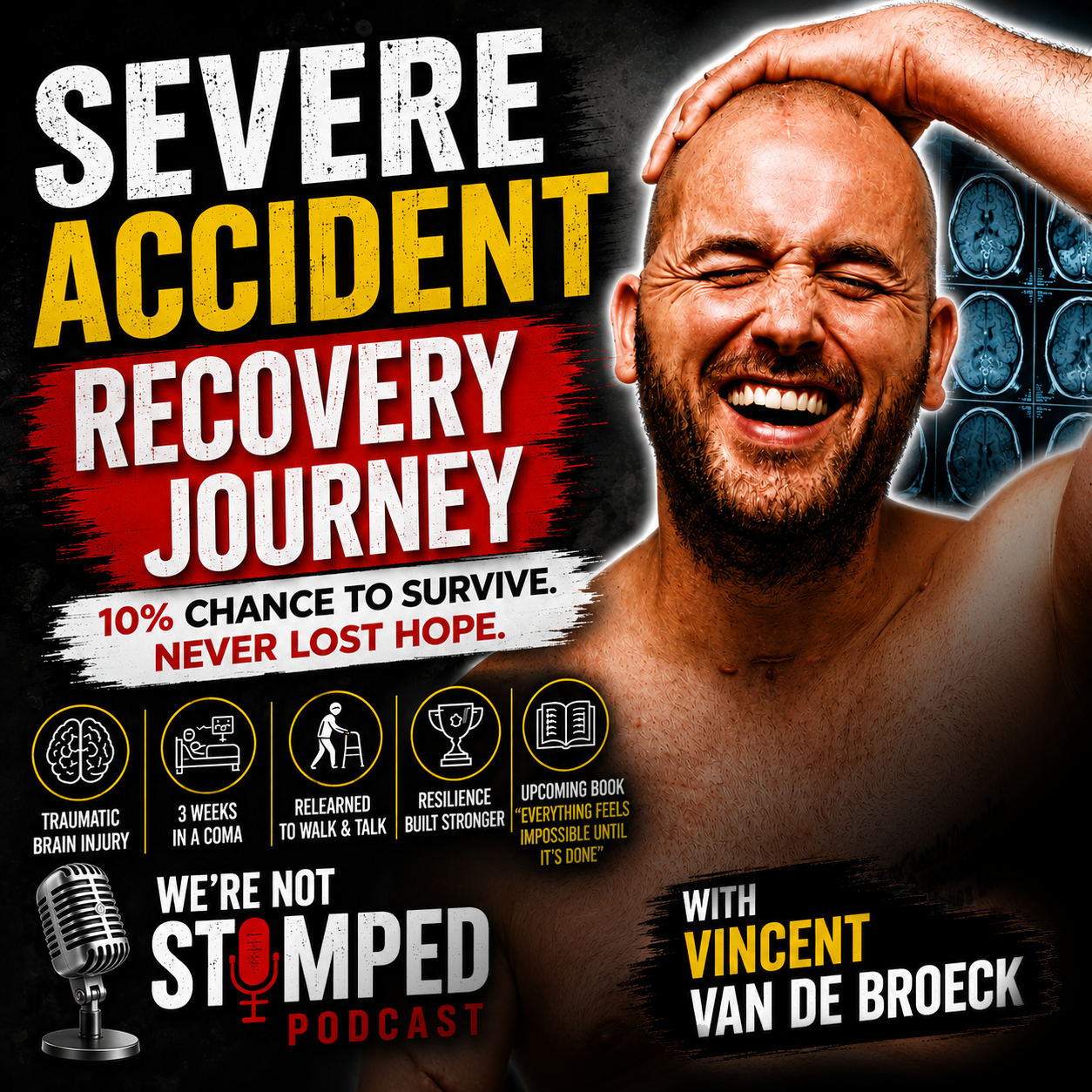
In this episode of We’re Not Stumped, host Mike Bolland talks with Vincent about his extraordinary recovery—relearning how to walk, talk, eat, and handle everyday tasks most of us take for granted. Vincent shares what it was really like to gradually wake from a coma, the difficult prognosis his family faced, and the extensive damage to his skull that eventually required a custom 3D-printed implant. He also discusses the people who refused to give up on him, particularly his wife and family, who lived through weeks of uncertainty while Vincent was unconscious. Through his recovery, Vincent came to see resilience not simply as something you're born with, but as something you can develop and strengthen. That experience also helped shape the ideas behind his book, Everything Feels Impossible Until It’s Done
August 26th, 2026|
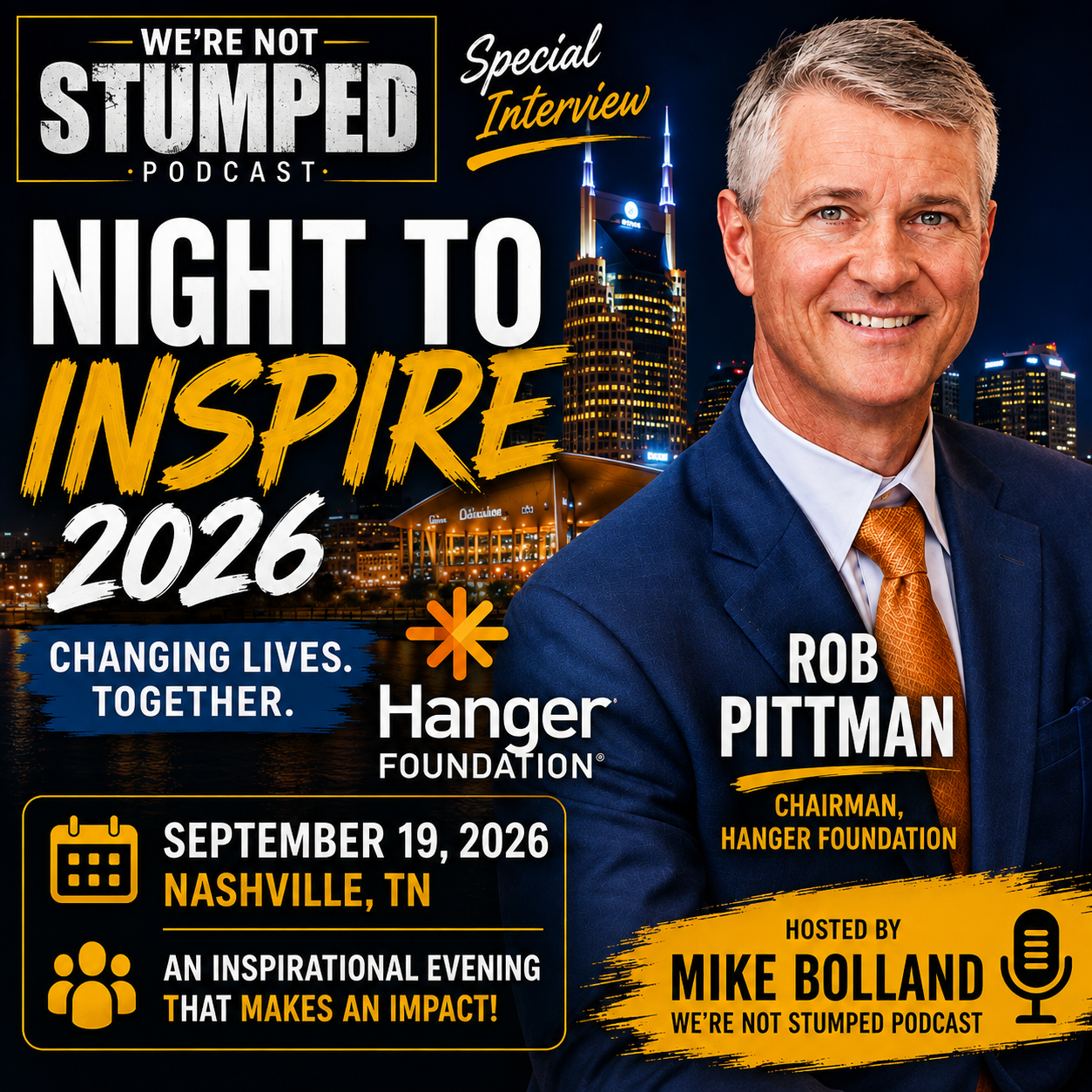
What happens when the limb loss community, prosthetics professionals, nonprofits, and supporters come together for a weekend built around giving back? In this episode of We’re Not Stumped, Mike Bolland talks with Rob Pittman of Hanger, Chairman of the Hanger Foundation’s Night to Inspire, about the upcoming 2026 Night to Inspire in Nashville, Tennessee. Now in its third year, Night to Inspire is expanding into a full weekend experience designed to raise funds, build awareness, and support organizations helping people with limb loss, limb difference, and mobility challenges.
August 25th, 2026|
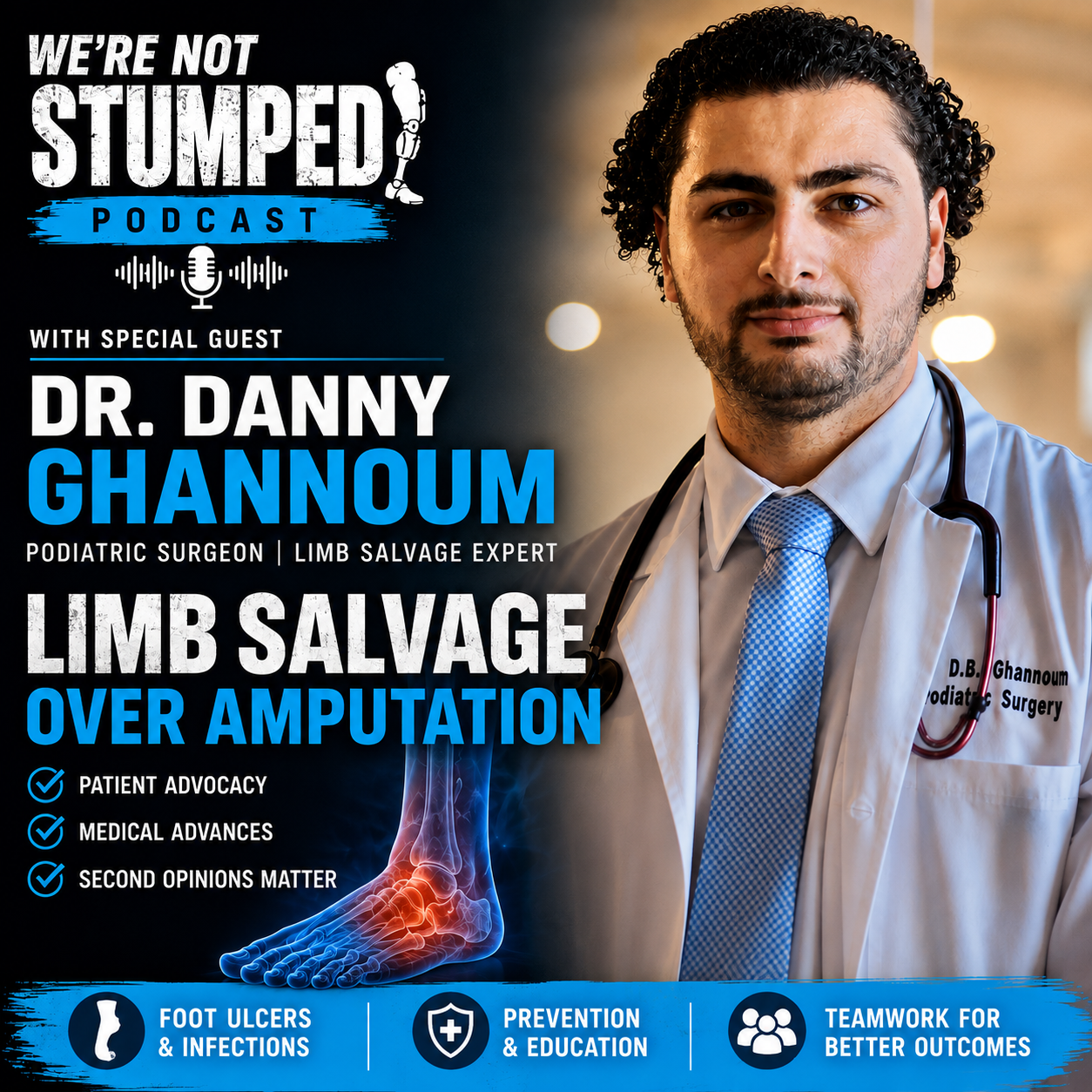
When should a limb be saved—and when might amputation provide a better quality of life? On this episode of We’re Not Stumped, Mike Bolland talks with podiatric surgeon Dr. Danny Ghannoum about limb salvage, diabetic foot complications, Charcot neuroarthropathy, bone infections, and the difficult decisions that can lead to lower-limb amputation. Dr. Ghannoum explains how diabetes, peripheral neuropathy, poor circulation, foot ulcers, and osteomyelitis can put a limb at risk. He also shares complex patient cases that illustrate an important point: saving a limb isn't always the same as achieving the best outcome for the patient.