Limb Salvage vs. Amputation: When Is Saving the Limb Not the Best Outcome?
When should a limb be saved—and when might amputation provide a better quality of life?
On this episode of We’re Not Stumped, Mike Bolland talks with podiatric surgeon Dr. Danny Ghannoum about limb salvage, diabetic foot complications, Charcot neuroarthropathy, bone infections, and the difficult decisions that can lead to lower-limb amputation.
Dr. Ghannoum explains how diabetes, peripheral neuropathy, poor circulation, foot ulcers, and osteomyelitis can put a limb at risk. He also shares complex patient cases that illustrate an important point: saving a limb isn’t always the same as achieving the best outcome for the patient.
The conversation explores advances in limb salvage and reconstructive surgery, including bone fusion techniques, while emphasizing the importance of considering each patient’s lifestyle, goals, and quality of life when making treatment decisions.
Mike and Dr. Ghannoum also discuss patient advocacy and second opinions, with Dr. Ghannoum encouraging patients to take an active role as the “quarterback” of their healthcare team.
Topics include:
- Limb salvage vs. amputation
- Diabetes and amputation risk
- Peripheral neuropathy
- Charcot foot / Charcot neuroarthropathy
- Diabetic foot ulcers and infections
- Osteomyelitis
- Below-the-knee amputation
- Limb reconstruction and fusion
- Patient advocacy and second opinions
- Quality of life when making treatment decisions
We’re Not Stumped shares conversations about limb loss, limb difference, prosthetics, adaptive living, advocacy, and the people working to improve outcomes for the limb loss community.
Listen on Apple Podcasts
Watch on YouTube
Listen on Spotify
Access to the resources, support, and equipment needed after limb loss can change a person's life—but for many, those essentials remain out of reach. In this episode of We're Not Stumped, host Mike Bolland spotlights Amputee Aid and A Leg Forever, two organizations dedicated to helping people with limb loss reclaim independence, confidence, and hope. While each organization has its own unique mission, both are committed to removing barriers by providing financial assistance, equipment, peer support, and other critical resources that help individuals move forward after amputation. Mike discusses why a supportive community can make all the difference during recovery and beyond. Whether you're living with limb loss, supporting someone who is, or simply looking for stories of compassion, advocacy, and resilience, this episode highlights how generosity and community can create lasting change.
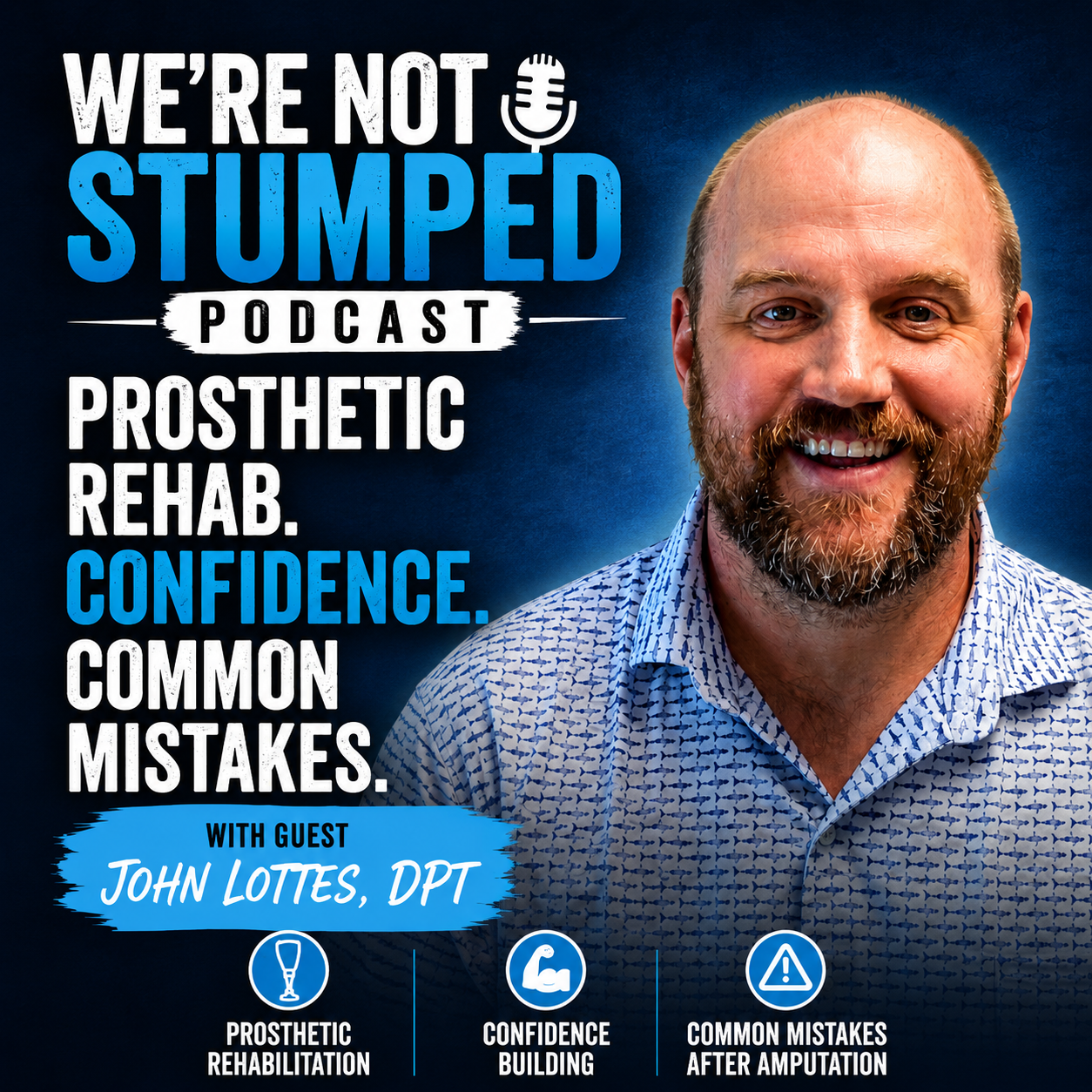
What does it really take to learn to walk again after an amputation? In this episode of We're Not Stumped, Mike Bolland welcomes physical therapist John Lottes, DPT, Clinical Supervisor at First Step Physical Therapy and an adjunct professor who specializes in prosthetic rehabilitation. John shares how an unexpected career path led him to working with individuals with limb loss and explains why the biggest hurdle in recovery often isn't physical—it's confidence. Together, Mike and John discuss the importance of celebrating small victories, building trust with your rehabilitation team, and developing the mindset needed to regain independence.
Sometimes, the biggest changes don't happen in a lab—they happen with a few carefully chosen words. In this episode of the We're Not Stumped podcast, I want to personally thank the LN-4 Hand Project (https://ln4handproject.org/) for updating its mission statement to better reflect the entire upper limb limb loss community. For many years, organizations have understandably focused on a specific group of individuals. But recognizing and including everyone living with upper limb loss and limb difference sends a powerful message: you belong, your story matters, and you are seen. As someone born without a right hand, this change means a great deal to me personally, and I believe it represents an important step toward greater inclusion across our community.