“You’re lucky—you were born that way.”
“At least you lost your limb when you were young.”
Within the limb loss community, these statements can overlook a significant part of someone’s life. Adapting physically is only one part of living with a limb difference or limb loss – and this applies to people of all ages. The emotional and social challenges deserve equal consideration.
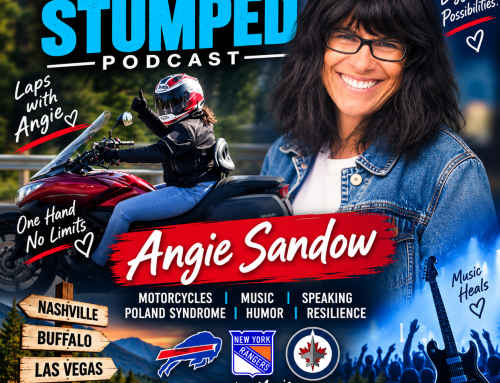
In this solo episode of We’re Not Stumped, I share my perspective as someone born without a right hand and challenge the assumption that people born with limb differences—or who experienced amputation as children—automatically have it easier. and I share a recent experience that shapes this conversation.
Through my podcast and community work, I’ve met people whose experiences include bullying, barriers to employment, difficulties forming relationships, and years of depression. While those experiences don’t all describe my own journey, they deserve to be heard and acknowledged.
Acquiring a disability later in life brings its own challenges, including grieving what someone has lost. Recognizing those challenges doesn’t require us to minimize someone else’s.
Each journey carries challenges that may not be visible from the outside. We build a stronger community when we listen to those experiences without deciding who has it easier.
Before we tell someone they’re lucky, let’s ask what their experience has actually been.
Listen on Apple Podcasts
Watch on YouTube
Listen on Spotify

In this powerful episode of We’re Not Stumped, host Mike Bolland shares two powerful stories of resilience, recovery, and the human spirit: 🏅 A Double Amputee’s Olympic Journey After surviving a devastating accident, this athlete didn’t give up—he set his sights on the Paralympic Games. Learn how he turned trauma into purpose, using adaptive training and relentless determination to pursue a spot on Team USA. 🦿 Mission Gait: Advancing Gait Rehabilitation Worldwide Meet the people behind Mission Gait, a nonprofit transforming the way physical therapists treat patients with complex walking challenges. From educational programs to international outreach, Mission Gait is creating a global movement for mobility. 🎧 Whether you're part of the limb loss community or just need a boost of hope, this episode shows what's possible when we move forward with purpose.

In this powerful episode of We’re Not Stumped, host Mike Bolland sits down with Eric Ford to talk about the car accident that changed the course of his life. In 2009, while driving through Atlanta with his children, Eric was struck by a drunk driver. Though his children escaped with only minor injuries, Eric was left with life-threatening damage to his leg. Over the next two months, Eric endured 12–13 surgeries, including skin and muscle grafts, in an attempt to save the leg. When the wound continued to reopen and the pain became unbearable, he made the courageous decision to undergo an amputation. Eric shares the emotional and physical challenges of that decision, and how it ultimately gave him a new lease on life.

Stevia Walker joins host Mike Bolland to share her powerful story of resilience after a life-altering car accident that left her with a fused cervical spine and Complex Regional Pain Syndrome (CRPS) in her right hand. After extensive research and consultations, Stevia made the courageous decision to undergo amputation of her hand—with the support of Dr. Stephen Niedermeyer. In this inspiring episode, Stevia reflects on rebuilding her life, from her former career as a hair stylist to her meaningful role today as a Girl Scout leader. She speaks candidly about living with phantom limb pain, her challenges with prosthetics, and how she empowers others by sharing her experiences. As a board member of the Dallas Amputee Network (DAN - https://dallasamputeenetwork.org/), Stevia highlights the nonprofit’s impactful work supporting amputees, caregivers, and families throughout North Texas. Founded in 2002, DAN provides education, peer mentorship, fitness opportunities, and social events like the upcoming Legapalooza fundraiser—all aimed at improving the quality of life for those affected by limb loss.