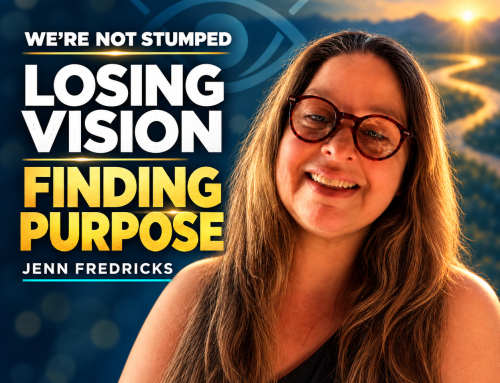
What happens when disability advocates from across the country come together to shape the future of independent living and accessibility?
In this solo episode of We’re Not Stumped, I share my personal reflections after attending the National Council on Independent Living (NCIL) Annual Conference in Washington, D.C., where I represented Ability360 as a member of its Board of Directors.
Learn More: https://ncil.org/
From celebrating ADA36: We Won’t Go Back to hearing powerful stories from advocates, policymakers, and leaders in the disability community, the conference reinforced why protecting and advancing disability rights remains so important.
In this episode, I discuss:
- My biggest takeaways from the conference
- Why the Independent Living movement continues to make a difference
- The importance of advocacy at the local and national levels
- How each of us can help build a more accessible and inclusive future
Whether you’re a person with a disability, a family member, an advocate, or simply interested in creating more inclusive communities, I hope these reflections encourage you to stay engaged and continue moving the conversation forward.
Thanks for listening to We’re Not Stumped. If you enjoyed this episode, please subscribe, leave a review, and share it with someone who believes everyone deserves the opportunity to live independently.
Listen on Apple Podcasts
Watch on YouTube
Listen on Spotify
Since the age of three, Kara Skrubis has practiced ballet. Throughout her youth, she traveled the nation, showcasing her ballet prowess. Alongside her performances, she commenced teaching ballet and started her studies as a dance major at University at [...]
In February 2020, Bruce Mezan faced a near-death encounter due to a DUI driver. While en route to lead a motorcycle safety class at 6:30 a.m., an incapacitated driver in an SUV collided with him at 50 mph as [...]

Bradley's journey as a below-the-knee amputee began in September 2014 due to a prolonged battle with osteomyelitis and multiple surgeries. His pivotal moment came three weeks prior to the amputation when he accompanied Jeff Linton, then president of Midwestern [...]