
In the first episode of season two of the We’re not Stumped podcast, I welcome television producer Rachel Grow. Rachel was born in Wiesbaden, Germany with a congenital condition called symbrachydactyly. Symbrachydactyly is a rare congenital hand condition in which a child is born with abnormally short fingers that may be webbed, misshaped or missing. It is often confused with other hand conditions but differs in that the underlying structure of the hand is affected — not just the fingers. The hand may not function well, and the bones, muscles, ligaments, and nerves of the hand are also often affected.
Even with her start in life, Rachel has continued to move forward with nothing but a positive attitude. She has worked in Hollywood both in front of and behind the camera, most notably as a producer on such shows as America’s Got Talent, American Idol and Shipping Wars. In this episode Rachel talks about her prosthetic designed by Arm Dynamics and created by Point Design, a great story on how she learned to tie her shoes…and much more!
To learn even more about Rachel, you can follow her on social:
YouTube: https://youtube.com/@BionicRachel
Instagram: https://www.instagram.com/bionic_rachel/
Her appearance on The Tex Factor: https://youtu.be/S2IBDkjZdJA?t=640
Prosthetic Links:
Arm Dynamics: https://www.armdynamics.com/
Point Design: https://www.pointdesignsllc.com/
#amputee #amputeelife #amputeestrong
Watch on YouTube
Listen on Spotify
In this episode of We’re Not Stumped, host Mike Bolland speaks with Neomi Flores, who became an amputee at age 43 after a blood clot changed her life forever. Neomi shares her powerful journey, including: The frightening symptoms that led to her amputation Facing fear and uncertainty before surgery A year in a wheelchair and the challenges of recovery Learning to walk again with prosthetics Drawing strength from her faith, her children, and small victories The meaning behind her tattoo: “Don’t just exist, live” Her story is one of resilience, gratitude, and determination—a reminder that even in life’s toughest moments, it’s possible to find purpose and live fully.
Mike Bolland highlights two powerful topics of resilience, and community. Topic 1 – A Call for Coaches ArizonAbility is launching a basketball clinic for adults with disabilities, and they’re looking for a passionate coach to lead the way. This isn’t just about basketball—it’s about confidence, teamwork, and creating a space where every player can thrive. Mike explains what this opportunity means for the community and how one coach can make a life-changing impact. Topic 2 – Inspiration from Legapalooza Mike also shares the inspiring story of Legapalooza (https://legapalooza.com/), founded by Tommy Donahue after a life-changing accident. What started as a small charity event has grown into a movement of resilience, connection, and giving back. Tommy’s journey reminds us that when we come together, we can turn challenges into opportunities for hope and empowerment.
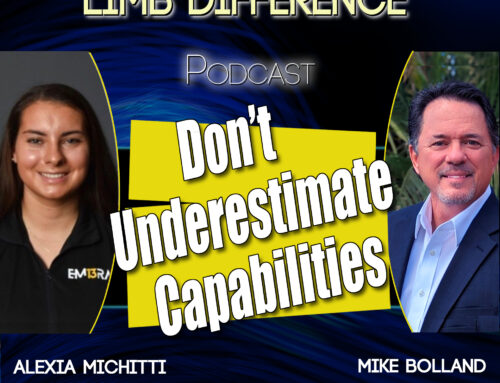
Host Mike Bolland sits down with Alexia Michitti—a public speaker, athlete, and entrepreneur born without a right hand. Together, they reflect on their shared experiences of limb difference and Alexia’s powerful journey of resilience, determination, and innovation. Alexia shares how she’s breaking barriers in sports and beyond—from representing the U.S. in the first Women’s Amputee Soccer World Cup, to filing a patent for adaptive clothing through her brand Em13race (https://em13race.com/), to finding her voice as a motivational speaker. She opens up about life without a prosthetic, her role models, and her passion for inspiring children with limb differences to embrace their uniqueness.
Leave A Comment