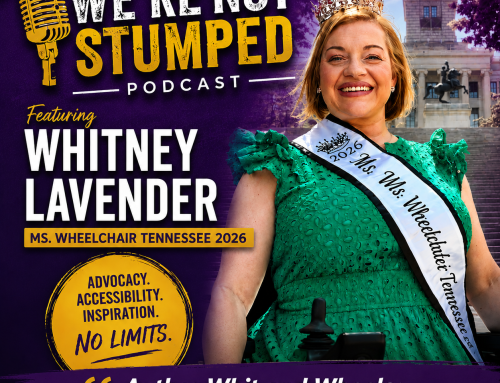
Because of his aggressive playing style—often sliding headfirst into bases while wearing only shorts—Eric injured his knees. The constant scraping of skin on hard gravel caused deep abrasions and internal injuries. Years and years of wear and tear led to surgeries and more surgeries. At a certain point, Eric had to decide whether to endure the terrible pain and immobility caused by the mounting surgeries or have his right leg amputated. He opted for the latter, and in 2009, Eric had his right leg removed. A few years later, in 2018, he had to have his left leg amputated, resulting in him becoming a bi-lateral, above-knee amputee. Both 2009 and 2018 were the worst and yet best years of his life.
Eric found purpose and meaning. This started with his discovery and involvement in the sport of rowing, specifically adaptive rowing. He found, even though he was a bilateral amputee, that he could row using a machine called an ERG. Eventually, this led him into competition. He competed three times in the World Indoor Rowing Adaptive Championships in Boston, Massachusetts and won a silver medal at his first Championship. He recently finished first in the category of 60-year and older lower leg amputee males. In 2012, he was invited to try out for the United States Paralympic Rowing Team. Though he did not win a spot on the team, he is forever grateful for the opportunity and experience he gained through the leadership, inspiration, and motivation of his fellow athletes.
Links
Eric Gabriel Website: https://gabrieleric42.wixsite.com/website
Eric’s GoFundMe for his house: https://www.gofundme.com/f/save-erics-disability-adaptive-home
GCU Graduation: https://youtu.be/QeZU8J3u2O0
GCU Feature: https://www.youtube.com/watch?v=NXRaKUdYJrI
Duke University Spotlight: https://www.contrastcreative.com/portfolio/all-staff-event/?prev_page=9
ABC11 TV Feature: https://abc11.com/double-amputee-rowing-eric-gabriel-gofundme/6380274/
CW22 Web Feature: https://raleighcw.com/news/22-now/eric-gabriels-amputee-journey
Eric Gabriel on Amplitude Magazine: https://livingwithamplitude.com/tag/eric-gabriel/
Want to be considered as a guest? Fill out the form here: https://werenotstumped.com/contact-amputee-podcast/
Want to learn more about our host Mike Bolland? See his website https://mikebolland.com/
Watch on YouTube
Listen on Spotify
Access to the resources, support, and equipment needed after limb loss can change a person's life—but for many, those essentials remain out of reach. In this episode of We're Not Stumped, host Mike Bolland spotlights Amputee Aid and A Leg Forever, two organizations dedicated to helping people with limb loss reclaim independence, confidence, and hope. While each organization has its own unique mission, both are committed to removing barriers by providing financial assistance, equipment, peer support, and other critical resources that help individuals move forward after amputation. Mike discusses why a supportive community can make all the difference during recovery and beyond. Whether you're living with limb loss, supporting someone who is, or simply looking for stories of compassion, advocacy, and resilience, this episode highlights how generosity and community can create lasting change.
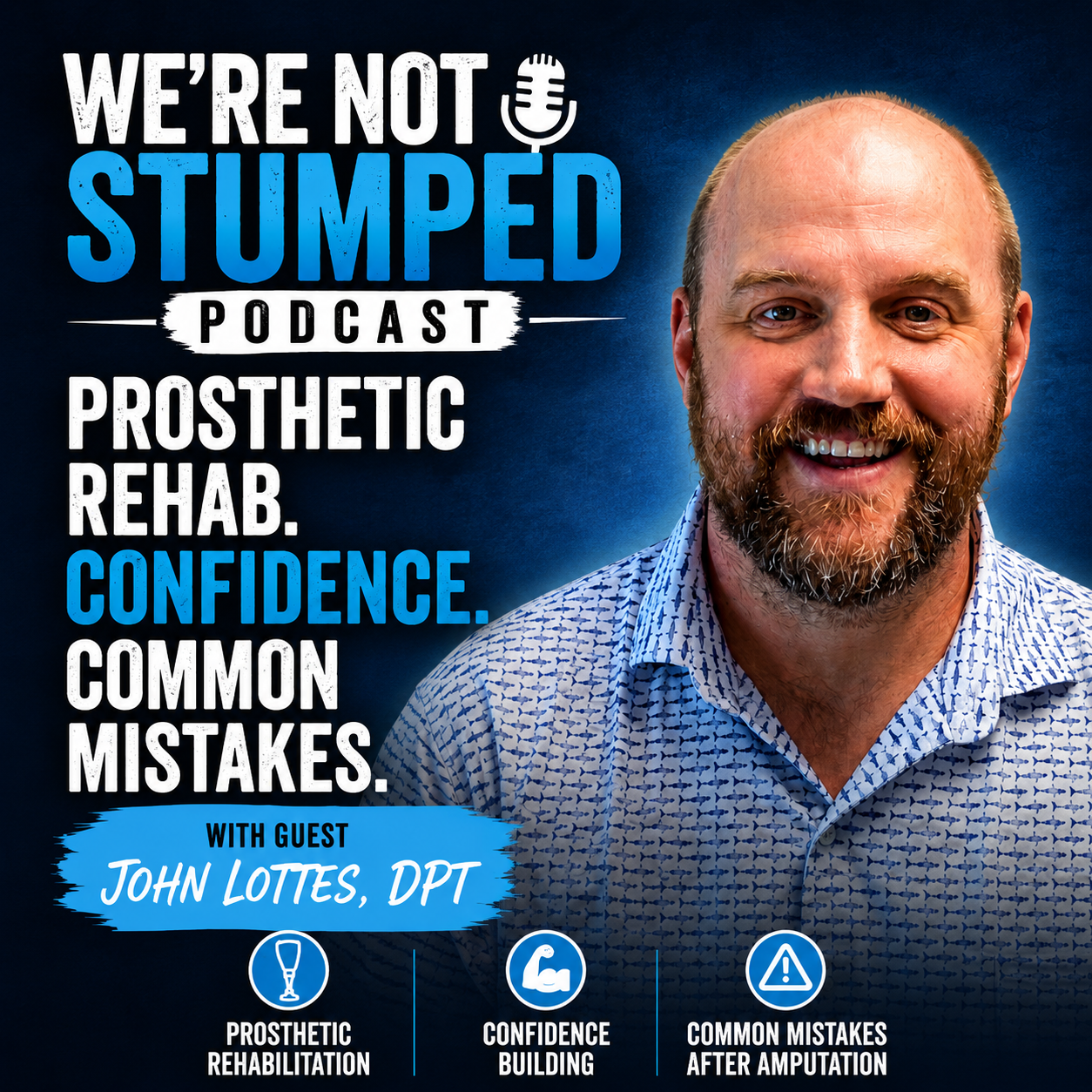
What does it really take to learn to walk again after an amputation? In this episode of We're Not Stumped, Mike Bolland welcomes physical therapist John Lottes, DPT, Clinical Supervisor at First Step Physical Therapy and an adjunct professor who specializes in prosthetic rehabilitation. John shares how an unexpected career path led him to working with individuals with limb loss and explains why the biggest hurdle in recovery often isn't physical—it's confidence. Together, Mike and John discuss the importance of celebrating small victories, building trust with your rehabilitation team, and developing the mindset needed to regain independence.
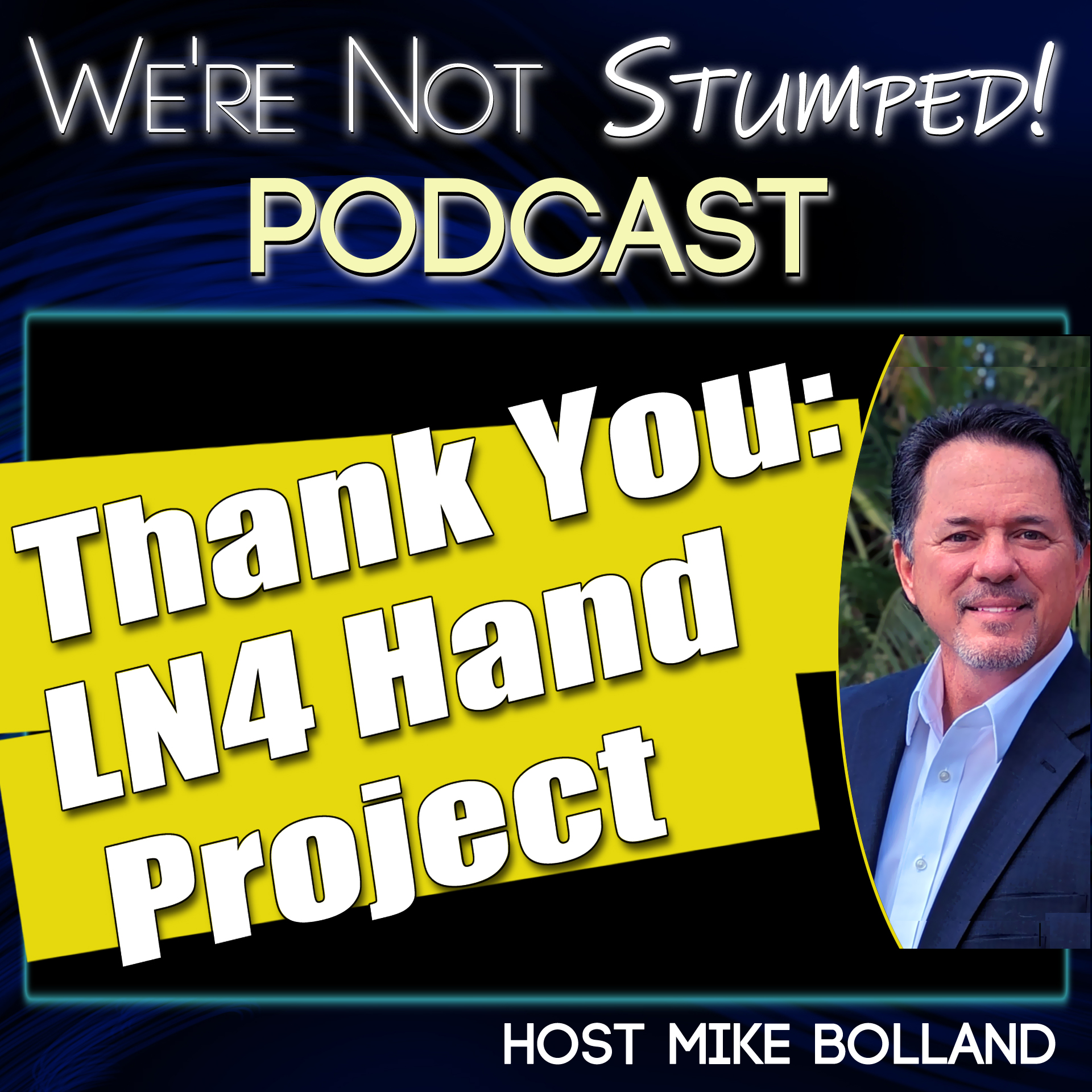
Sometimes, the biggest changes don't happen in a lab—they happen with a few carefully chosen words. In this episode of the We're Not Stumped podcast, I want to personally thank the LN-4 Hand Project (https://ln4handproject.org/) for updating its mission statement to better reflect the entire upper limb limb loss community. For many years, organizations have understandably focused on a specific group of individuals. But recognizing and including everyone living with upper limb loss and limb difference sends a powerful message: you belong, your story matters, and you are seen. As someone born without a right hand, this change means a great deal to me personally, and I believe it represents an important step toward greater inclusion across our community.