
In the first episode of season two of the We’re not Stumped podcast, I welcome television producer Rachel Grow. Rachel was born in Wiesbaden, Germany with a congenital condition called symbrachydactyly. Symbrachydactyly is a rare congenital hand condition in which a child is born with abnormally short fingers that may be webbed, misshaped or missing. It is often confused with other hand conditions but differs in that the underlying structure of the hand is affected — not just the fingers. The hand may not function well, and the bones, muscles, ligaments, and nerves of the hand are also often affected.
Even with her start in life, Rachel has continued to move forward with nothing but a positive attitude. She has worked in Hollywood both in front of and behind the camera, most notably as a producer on such shows as America’s Got Talent, American Idol and Shipping Wars. In this episode Rachel talks about her prosthetic designed by Arm Dynamics and created by Point Design, a great story on how she learned to tie her shoes…and much more!
To learn even more about Rachel, you can follow her on social:
YouTube: https://youtube.com/@BionicRachel
Instagram: https://www.instagram.com/bionic_rachel/
Her appearance on The Tex Factor: https://youtu.be/S2IBDkjZdJA?t=640
Prosthetic Links:
Arm Dynamics: https://www.armdynamics.com/
Point Design: https://www.pointdesignsllc.com/
#amputee #amputeelife #amputeestrong
Watch on YouTube
Listen on Spotify
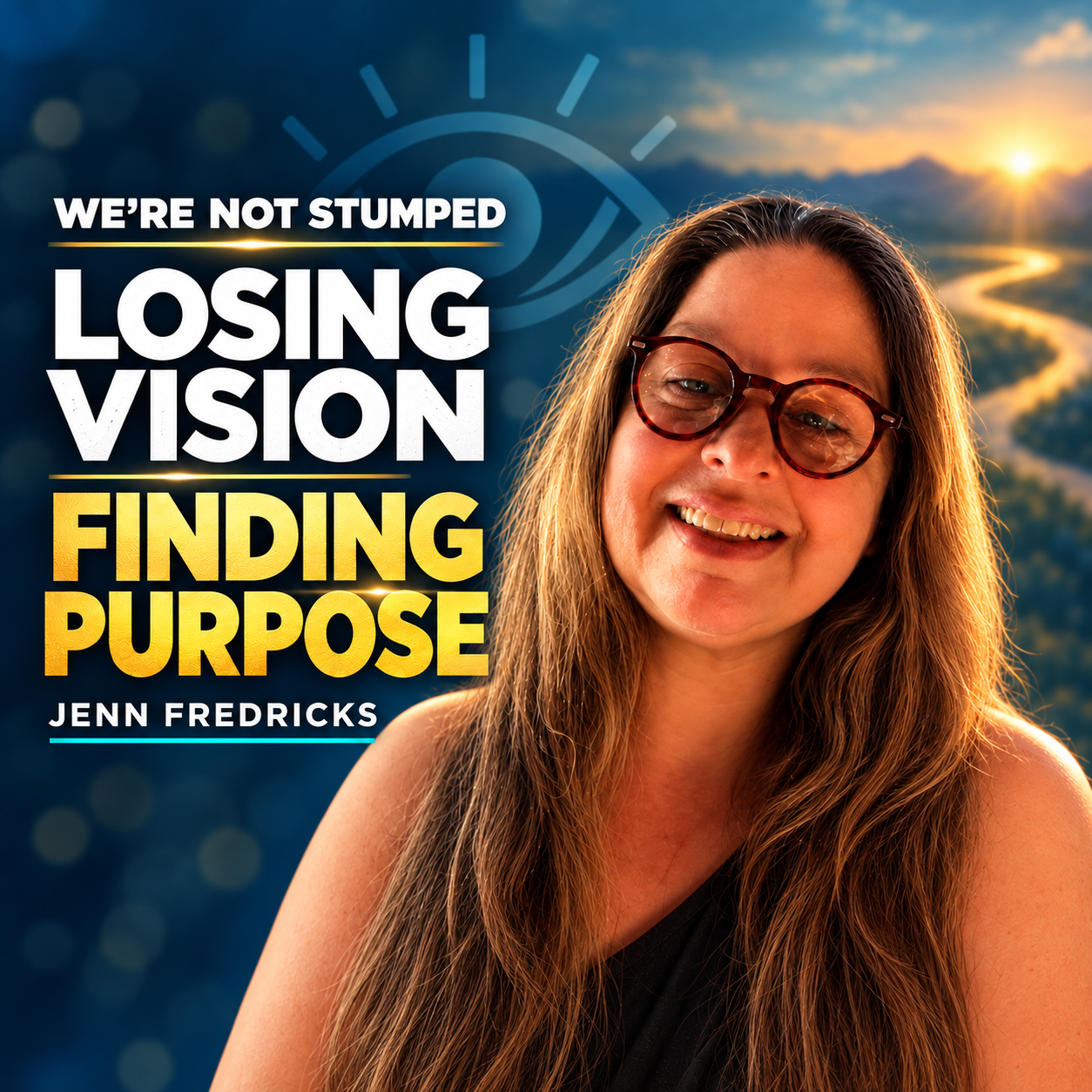
How do you move forward when vision loss changes your career, independence, and plans for the future? In this episode of We’re Not Stumped, Mike Bolland speaks with Jennifer Frederick about living with permanent vision loss and learning to advocate for herself along the way. Jennifer explains how changes in her vision eventually forced her to leave a career in crisis management. She also discusses the challenges she now faces while looking for work, including interview practices that have left her questioning whether she is being treated fairly as a person with a disability. The conversation explores Jenn’s decision not to undergo surgery for her detached retinas, the importance of seeking medical attention when your vision changes, and the need to take ownership of your healthcare.
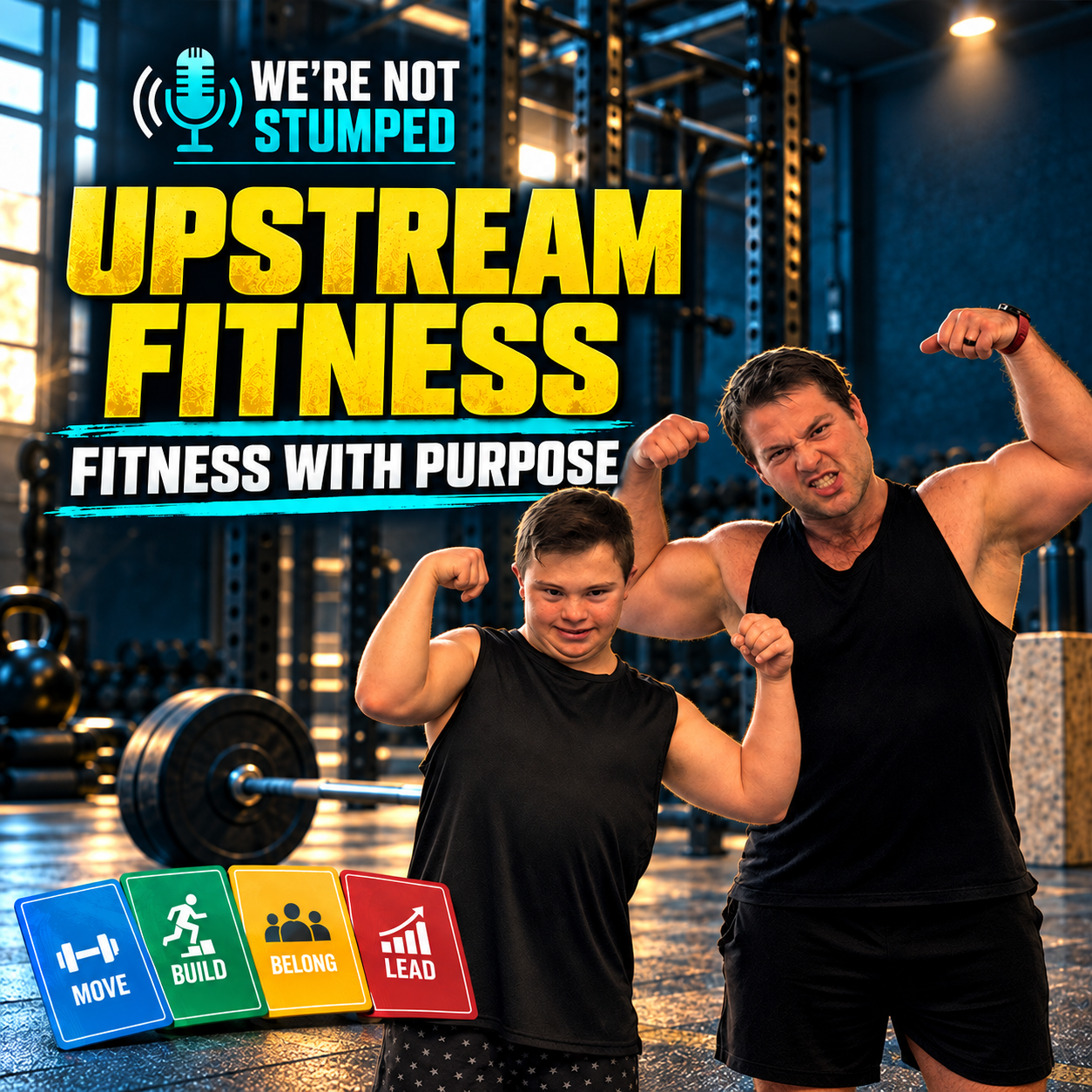
What happens when we stop deciding what someone is capable of—and give them the opportunity to lead? In this episode of We’re Not Stumped, Mike Bolland speaks with Nathan Kennedy of Upstream Fitness, Chris Kocurek, and Chris’s son, Coach Cameron “Coach Cam” Kocurek. Cameron, who has Down syndrome, began gymnastics as a child and went on to compete through Special Olympics and unified gymnastics. Today, he is using the confidence and skills he developed as an athlete to help coach others at Upstream Fitness. Nathan explains how Upstream Fitness uses movement, games, coaching cards, and step-by-step instruction to make exercise accessible for people with intellectual and developmental disabilities. Chris shares Cameron’s journey from athlete to assistant PE coach—and now toward meaningful employment and greater independence.
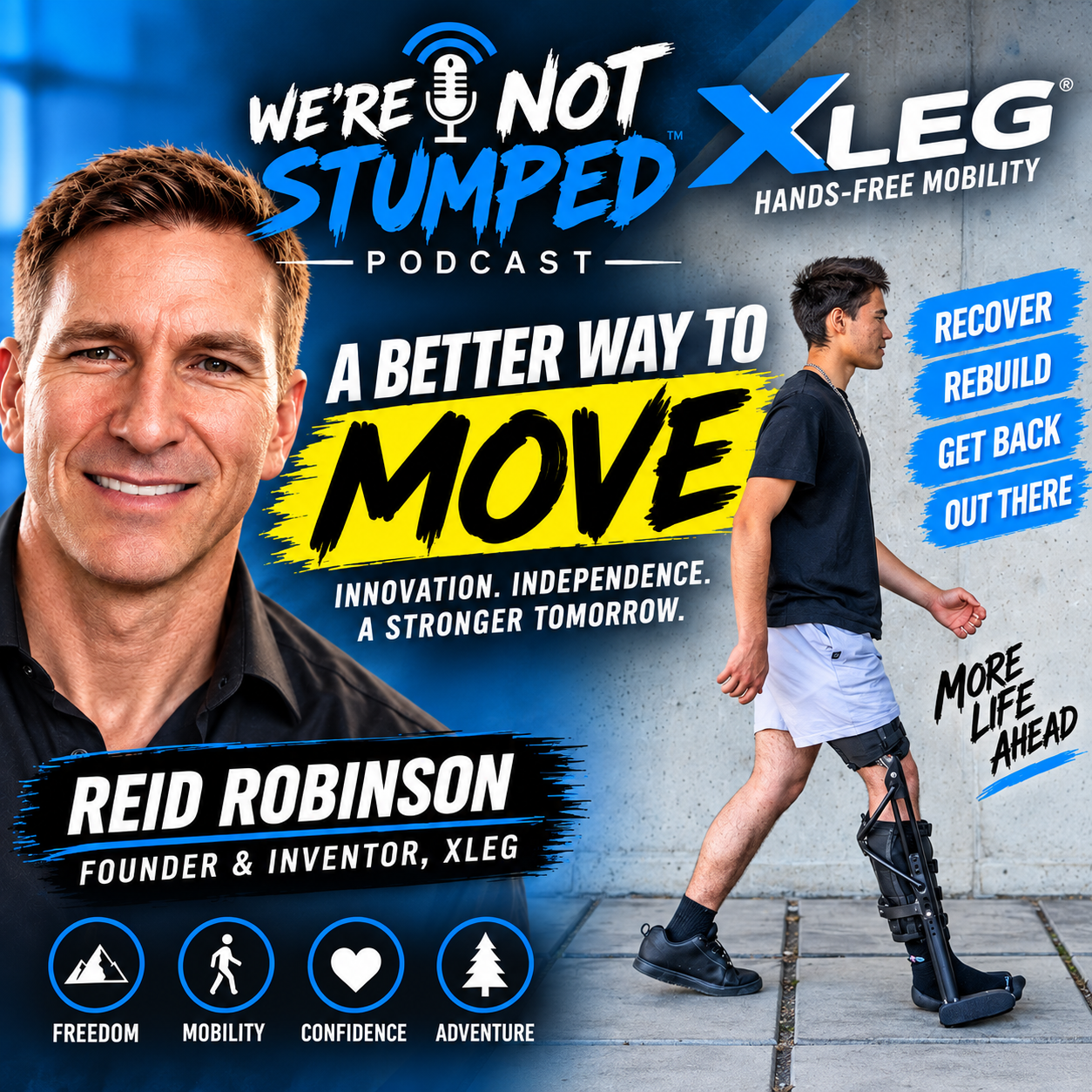
After losing control on an icy road in Calgary, Reid Robinson crashed into a tree and suffered devastating injuries to his lower leg. What followed were two and a half years of recovery, 13 surgeries, broken surgical hardware, bone infections, and a difficult decision between amputation and trying once more to save his leg. While recovering, Reid realized that none of the available mobility devices gave him the freedom he needed. So, despite having no welding experience, he taught himself by watching online videos and built his first leg brace from aluminum, crutches, and an IKEA cutting board. That garage-built prototype eventually became the X-Leg, a hands-free knee crutch designed to help people with lower-leg injuries stay active and independent during recovery.
Leave A Comment