Because of his aggressive playing style—often sliding headfirst into bases while wearing only shorts—Eric injured his knees. The constant scraping of skin on hard gravel caused deep abrasions and internal injuries. Years and years of wear and tear led to surgeries and more surgeries. At a certain point, Eric had to decide whether to endure the terrible pain and immobility caused by the mounting surgeries or have his right leg amputated. He opted for the latter, and in 2009, Eric had his right leg removed. A few years later, in 2018, he had to have his left leg amputated, resulting in him becoming a bi-lateral, above-knee amputee. Both 2009 and 2018 were the worst and yet best years of his life.
Eric found purpose and meaning. This started with his discovery and involvement in the sport of rowing, specifically adaptive rowing. He found, even though he was a bilateral amputee, that he could row using a machine called an ERG. Eventually, this led him into competition. He competed three times in the World Indoor Rowing Adaptive Championships in Boston, Massachusetts and won a silver medal at his first Championship. He recently finished first in the category of 60-year and older lower leg amputee males. In 2012, he was invited to try out for the United States Paralympic Rowing Team. Though he did not win a spot on the team, he is forever grateful for the opportunity and experience he gained through the leadership, inspiration, and motivation of his fellow athletes.
Links
Eric Gabriel Website: https://gabrieleric42.wixsite.com/website
Eric’s GoFundMe for his house: https://www.gofundme.com/f/save-erics-disability-adaptive-home
GCU Graduation: https://youtu.be/QeZU8J3u2O0
GCU Feature: https://www.youtube.com/watch?v=NXRaKUdYJrI
Duke University Spotlight: https://www.contrastcreative.com/portfolio/all-staff-event/?prev_page=9
ABC11 TV Feature: https://abc11.com/double-amputee-rowing-eric-gabriel-gofundme/6380274/
CW22 Web Feature: https://raleighcw.com/news/22-now/eric-gabriels-amputee-journey
Eric Gabriel on Amplitude Magazine: https://livingwithamplitude.com/tag/eric-gabriel/
Want to be considered as a guest? Fill out the form here: https://werenotstumped.com/contact-amputee-podcast/
Want to learn more about our host Mike Bolland? See his website https://mikebolland.com/
Watch on YouTube
Listen on Spotify
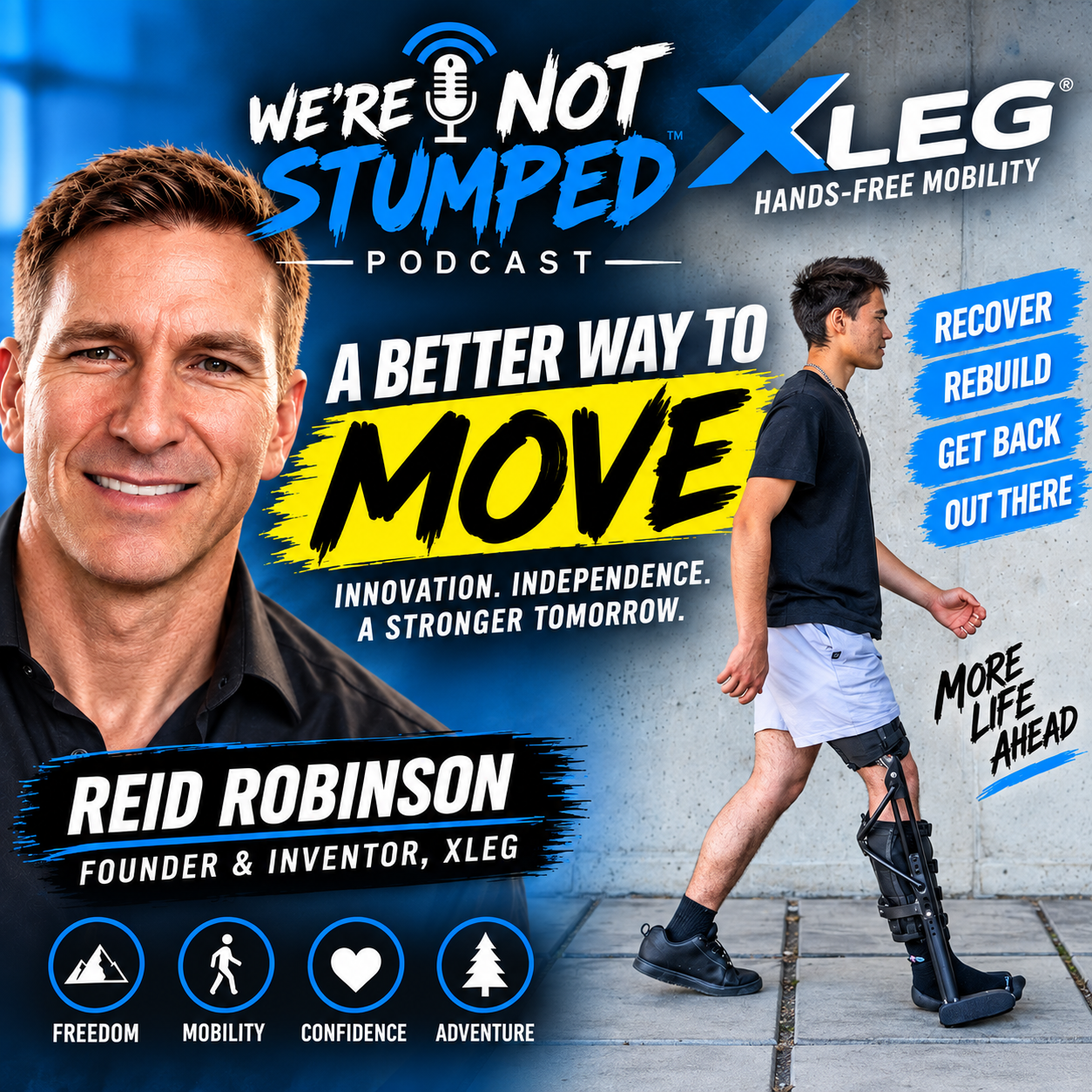
After losing control on an icy road in Calgary, Reid Robinson crashed into a tree and suffered devastating injuries to his lower leg. What followed were two and a half years of recovery, 13 surgeries, broken surgical hardware, bone infections, and a difficult decision between amputation and trying once more to save his leg. While recovering, Reid realized that none of the available mobility devices gave him the freedom he needed. So, despite having no welding experience, he taught himself by watching online videos and built his first leg brace from aluminum, crutches, and an IKEA cutting board. That garage-built prototype eventually became the X-Leg, a hands-free knee crutch designed to help people with lower-leg injuries stay active and independent during recovery.
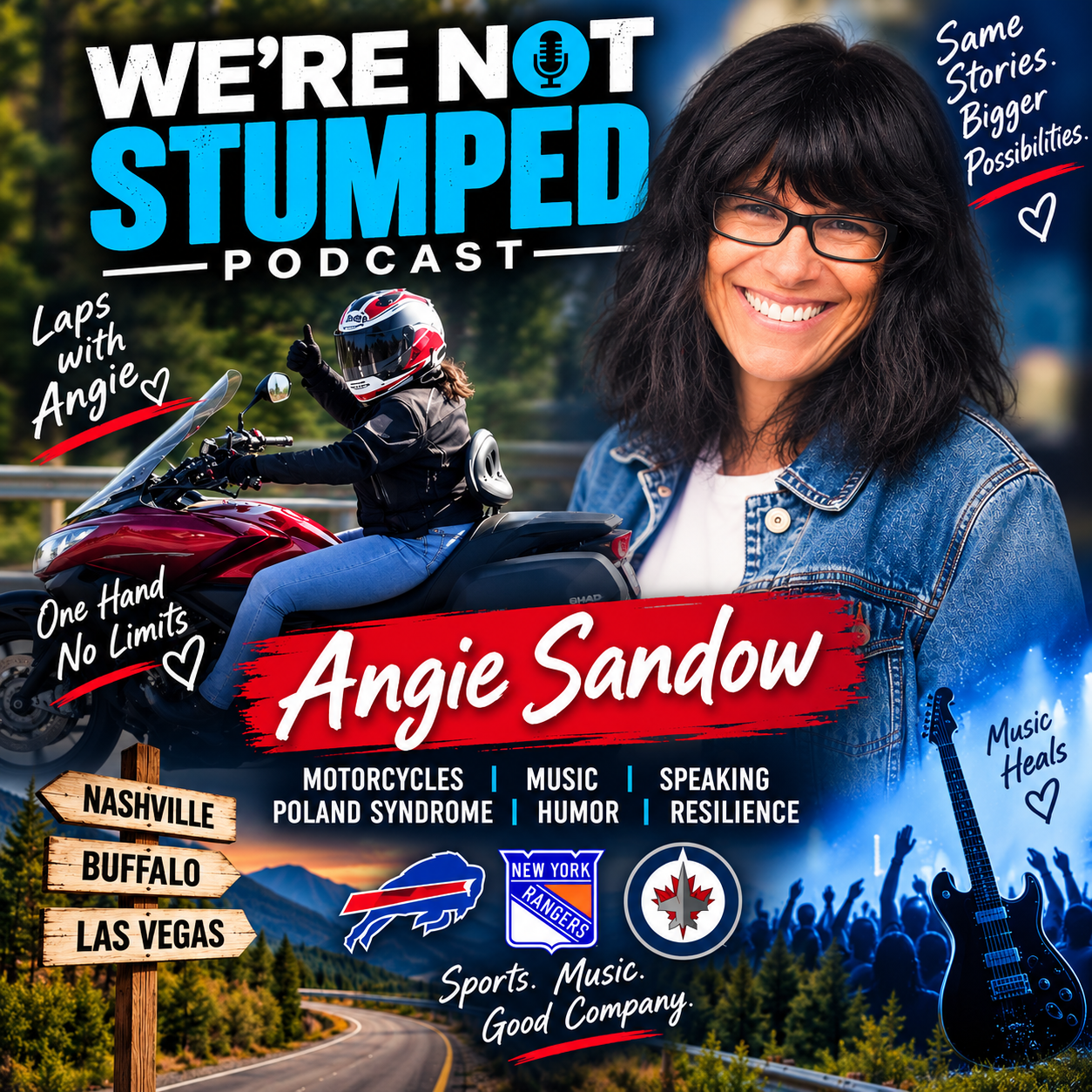
Angie Sandow was born with one hand and Poland syndrome—but that hasn't stopped her from riding motorcycles, playing guitar, performing onstage, and finding plenty of reasons to laugh along the way. In this episode of We’re Not Stumped, Mike Bolland reconnects with Angie for a candid and often funny conversation about growing up with a limb difference, dealing with bullying and unwanted attention, and learning to turn difficult experiences into something positive. Angie shares how music became an important part of her life, including performing with bands and using a custom prosthetic guitar holder. She also talks about becoming a one-handed motorcycle rider and the modifications that allow her to ride, including moving the throttle to the left side.
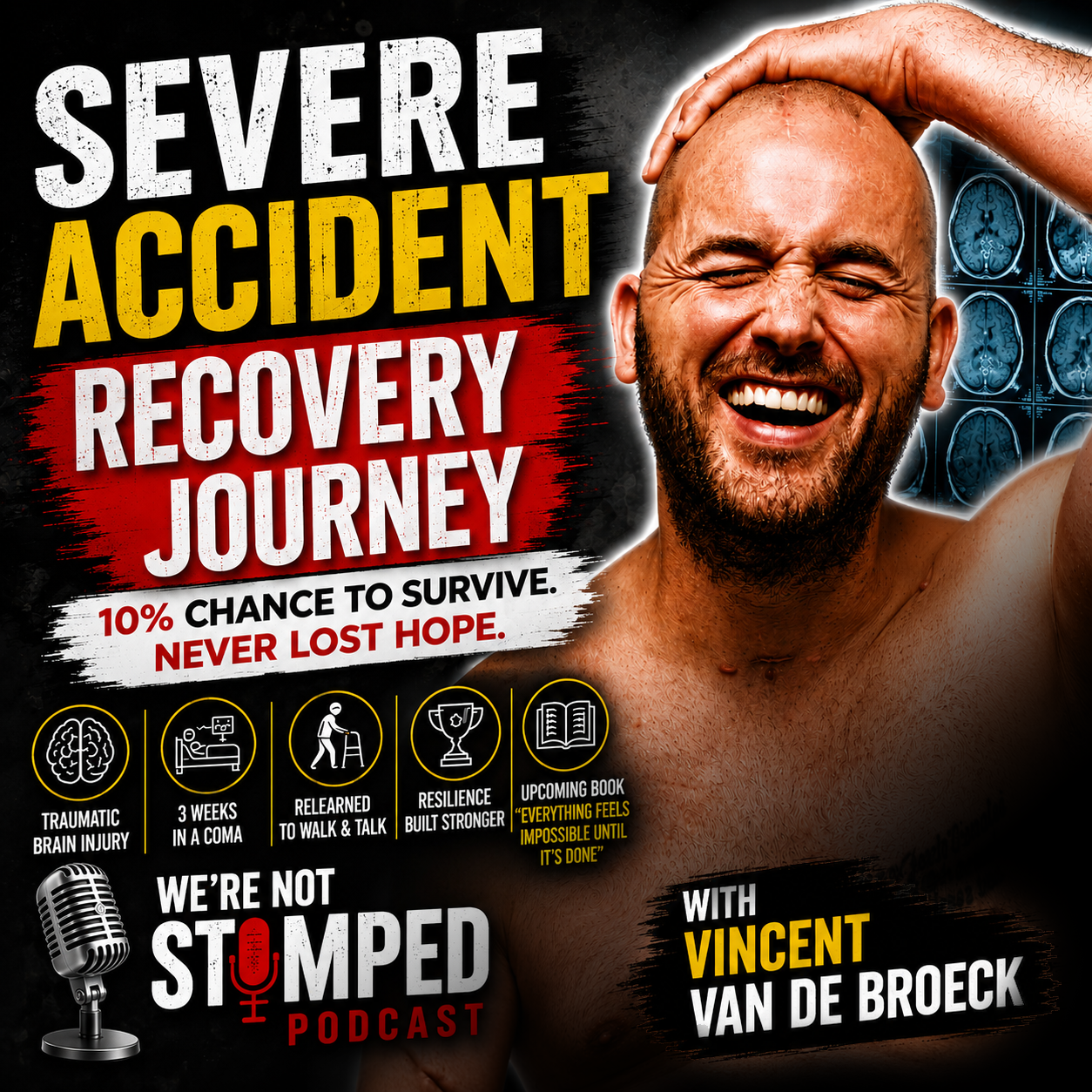
In this episode of We’re Not Stumped, host Mike Bolland talks with Vincent about his extraordinary recovery—relearning how to walk, talk, eat, and handle everyday tasks most of us take for granted. Vincent shares what it was really like to gradually wake from a coma, the difficult prognosis his family faced, and the extensive damage to his skull that eventually required a custom 3D-printed implant. He also discusses the people who refused to give up on him, particularly his wife and family, who lived through weeks of uncertainty while Vincent was unconscious. Through his recovery, Vincent came to see resilience not simply as something you're born with, but as something you can develop and strengthen. That experience also helped shape the ideas behind his book, Everything Feels Impossible Until It’s Done