
Episode 15 of Season Two of the We’re Not Stumped podcast features Penta Medical Recycling. My guests from this great organization are founder Henry Iseman, Deputy Director Anna Szczepanek and Director of Operations Mijamin Strong.
The organization was founded in 2016, when a group of university students established Penta Medical Recycling with a dual mission: to make affordable prosthetic care accessible in low- and middle-income countries while repurposing medical waste in the United States.
This initiative stemmed from the recognition that a staggering 85-95% of the world’s 100 million amputees lacked access to proper prosthetic care and equipment. Meanwhile, hundreds of thousands of still functional but slightly outdated prostheses were being replaced and discarded annually in the United States.
Penta discovered a solution to address both of these pressing issues simultaneously. By collecting and refurbishing used prosthetic and orthotic equipment in the United States, they could declutter private homes, ease the burden on clinics responsible for disposing of unusable devices, and, most importantly, restore the ability to walk, work, and thrive for amputees worldwide.
In 2018, Penta Medical Recycling was officially incorporated as a 501(c)(3) nonprofit organization. Since then, it has evolved into a global operation collaborating with government health agencies, both private and public healthcare institutions, and various nonprofit organizations, both within the United States and internationally. Penta’s operations have expanded to encompass 16 different countries across six regions worldwide.
Links:
Penta Medical Recycling Website: https://pentaprosthetics.org
Penta Medical Recycling Facebook: https://www.facebook.com/penta.medical.recycling/
Penta Medical Recycling Instagram: https://www.instagram.com/penta.medical.recycling/
Penta Medical Recycling LinkedIn: https://www.linkedin.com/company/penta-medical-recycling/
#amputee #amputeelife #amputeestrong #prosthetics #prostheticleg #amplife #amputation #limbloss #amputees #adaptiveathlete #disability #amputeefitness #prosthetic #prosthesis #disabled #adaptive #iamadaptive #amputeelifestyle #oneleg #amputados #bionic #inspiration
Watch on YouTube
Listen on Spotify
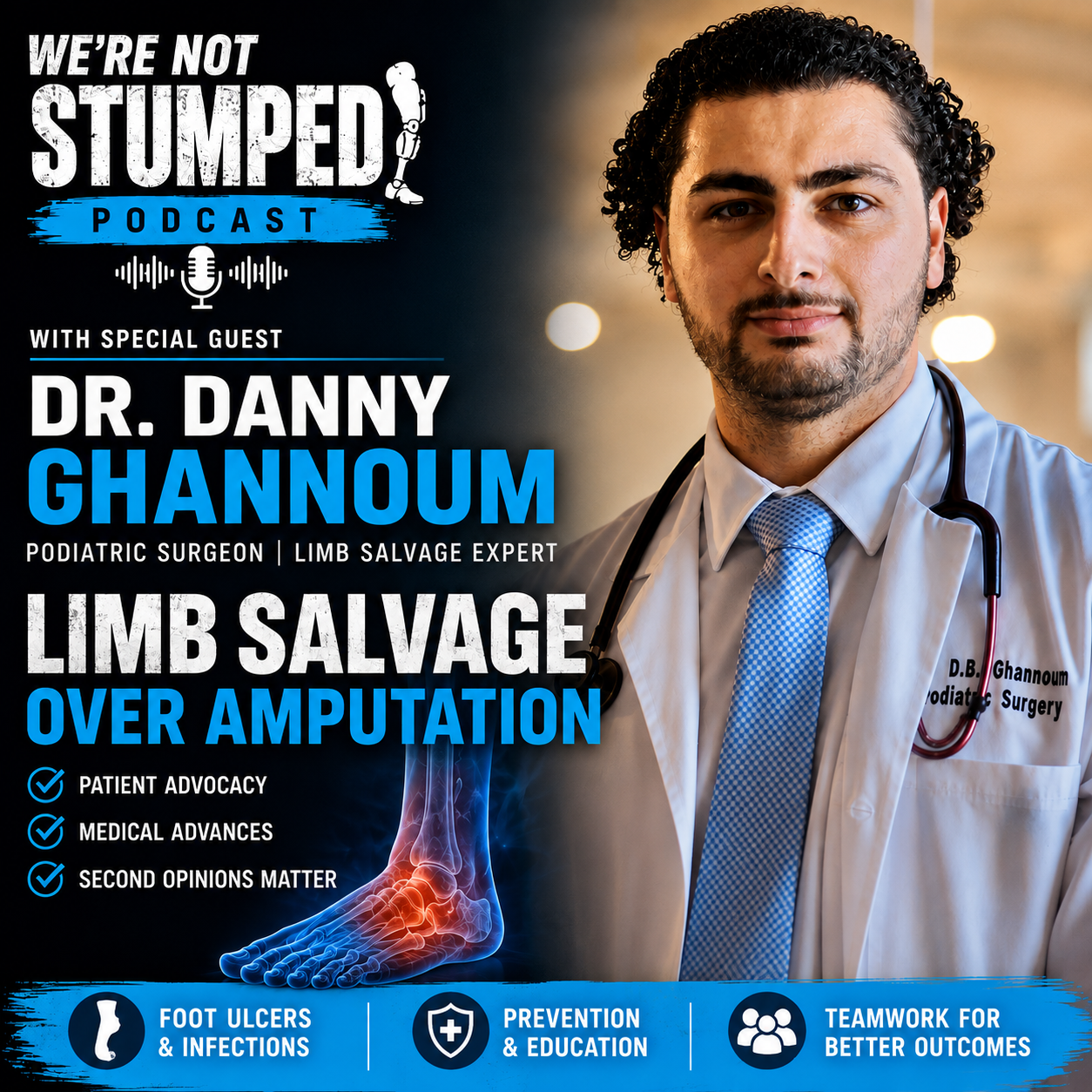
When should a limb be saved—and when might amputation provide a better quality of life? On this episode of We’re Not Stumped, Mike Bolland talks with podiatric surgeon Dr. Danny Ghannoum about limb salvage, diabetic foot complications, Charcot neuroarthropathy, bone infections, and the difficult decisions that can lead to lower-limb amputation. Dr. Ghannoum explains how diabetes, peripheral neuropathy, poor circulation, foot ulcers, and osteomyelitis can put a limb at risk. He also shares complex patient cases that illustrate an important point: saving a limb isn't always the same as achieving the best outcome for the patient.
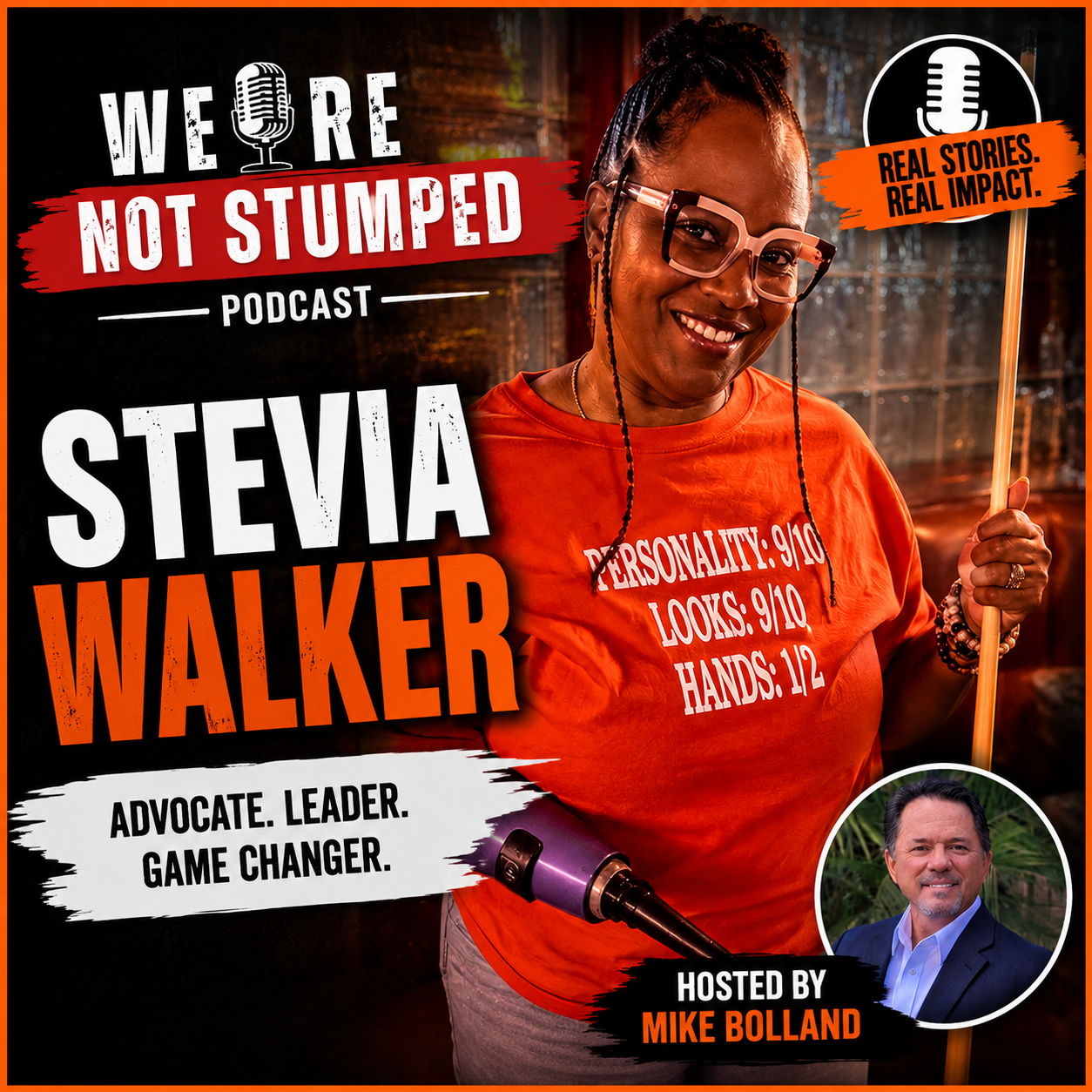
What are you actually allowed to ask someone with a service dog? Do service dogs need paperwork? And what happens when businesses get the rules wrong? In this episode of We’re Not Stumped, Mike Bolland talks with upper-limb amputee Stevia Walker about service animals, disability, prosthetics, self-advocacy, and life after limb loss. Stevia shares an encounter at a hotel where employees demanded documentation for her service dog and incorrectly assumed the dog was an emotional support animal. She discusses what people and businesses should understand about service animals and why these interactions matter.
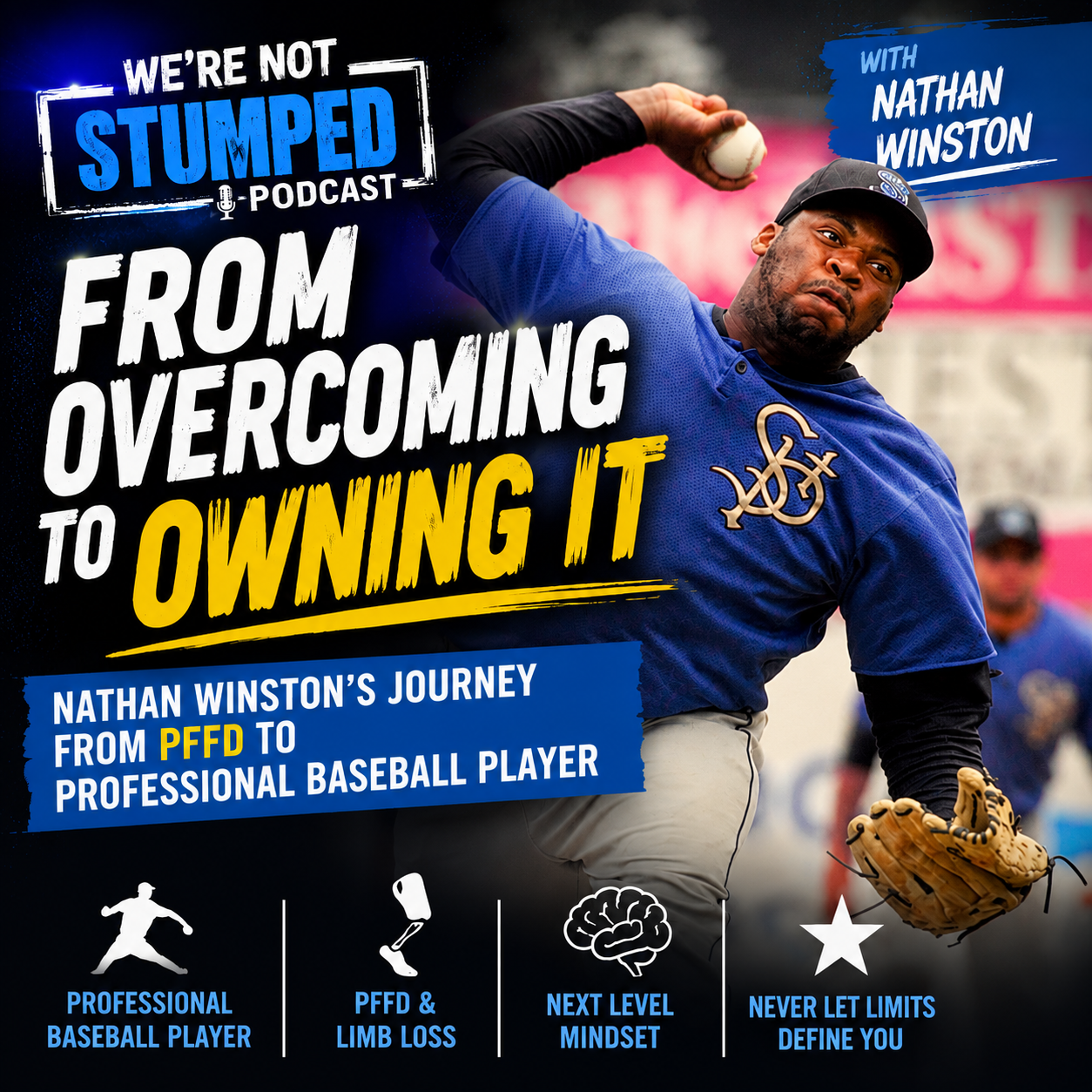
What does it take to overcome a challenge you've faced since birth? In this episode of We're Not Stumped, Mike Bolland welcomes Nathan Winston, who was born with Proximal Femoral Focal Deficiency (PFFD), a rare limb difference that led to the amputation of his left leg at the age of four. Nathan shares his incredible journey from adapting to life with a prosthetic to excelling in football, basketball, and baseball. His determination eventually carried him to the Little League World Series and into the ranks of professional baseball. Along the way, Nathan reflects on the challenges he faced, the resilience he developed, and the mindset that helped him keep moving forward—even when the path wasn't easy.
Leave A Comment